
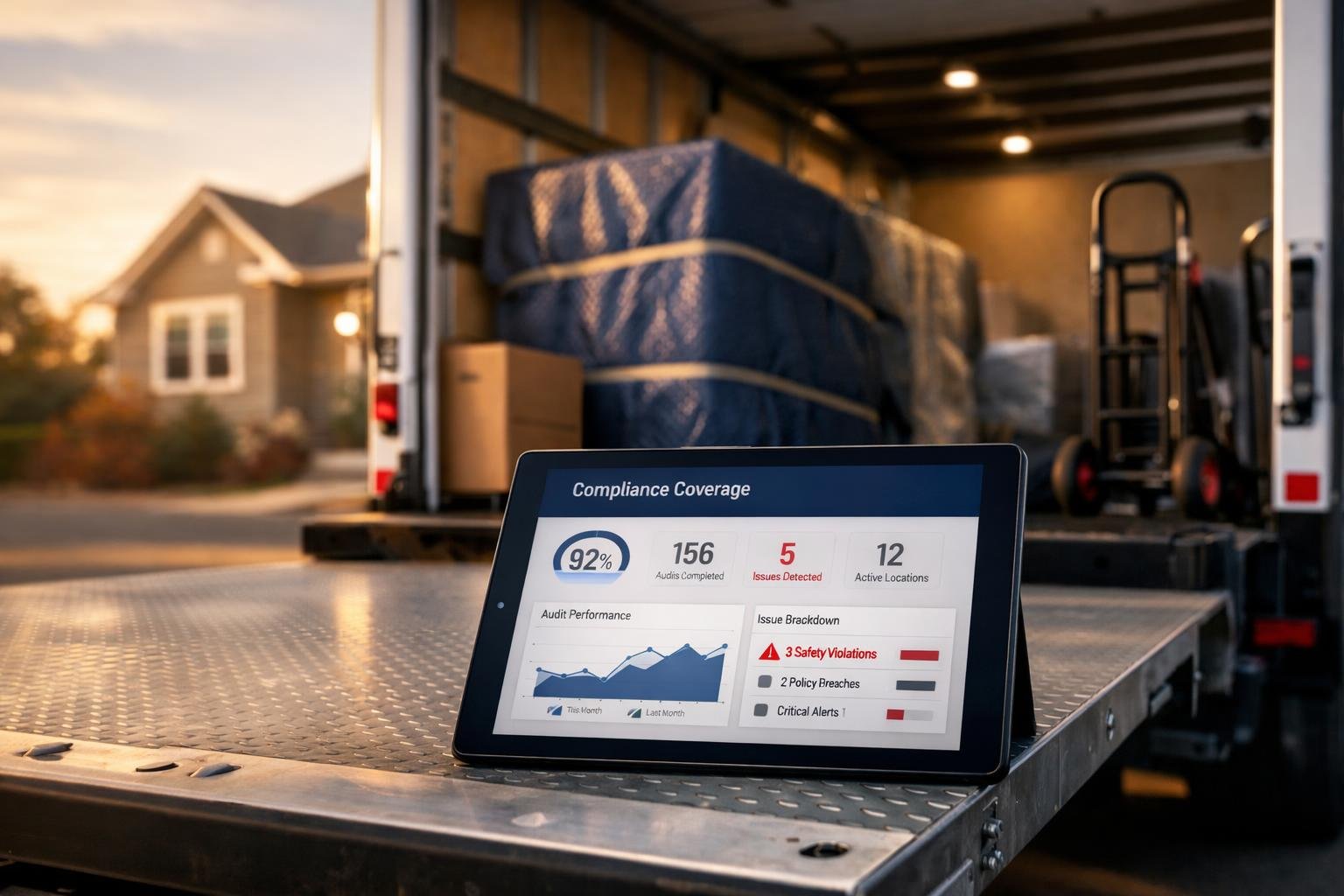
The Wayfair, Lowe’s, and Home Depot home-delivery accounts already sitting on your commercial book are the most obvious cross-sell you haven’t written yet. Furniture delivery 1099 insurance is the line that turns a furniture retailer’s existing white-glove delivery network into a new revenue stream on a renewal you already control. You wrote their commercial auto, their property, maybe their GL. The two-person delivery-and-install crews running their last mile are almost always 1099 independent contractors, and almost none of them carry Occupational Accident coverage today. That gap is your opening.
Why Furniture Delivery 1099 Insurance Is the Easiest Add on Your Book
Producers chasing Amazon DSP accounts are fighting a crowded field. The big-box and home-furnishings home-delivery channel is quieter and stickier. Furniture stores (SIC 5712) and appliance dealers (SIC 5722) almost never deliver their own heavy goods anymore. They contract it out to regional last-mile networks that staff two-person teams of independent delivery and installation contractors who haul, place, assemble, and haul away. These are not W-2 warehouse staff. They are 1099 crews running sustained, recurring engagement week after week, which is exactly the engagement profile furniture delivery 1099 insurance is built for.
The reason this account type is underwritten is structural. The retailer thinks their commercial auto policy covers the delivery operation. The delivery network operator assumes the retailer’s coverage backstops them. The 1099 installers assume someone above them carries protection. Nobody actually owns the contractor injury exposure, and you are the producer who already has the relationship and the certificate in the file. The last-mile delivery space is where this gap is widest, because furniture and appliance delivery carries a heavier physical-injury profile than parcel — lifting 200-pound armoires up three flights is a different risk than dropping a box on a porch.
How Furniture Last-Mile Differs From Amazon DSP
If you already place Occupational Accident on parcel DSP accounts, do not assume the furniture channel maps one-to-one. It does not, and the differences are where you add value as the producer who actually understands the account.
The contractor profile is heavier
Amazon DSP routes are high-volume, low-weight, solo drivers. Furniture and appliance home delivery is low-volume, high-weight, two-person crews performing physical installation inside the customer’s home. Strains, falls on stairs, and lifting injuries dominate the claim profile. The contractor is exposed for a longer dwell time at each stop, and the install work adds a layer of physical risk parcel delivery never touches.
The engagement is more sustained
Big-box and furniture-retailer delivery networks run consistent weekly routes tied to a retailer’s fulfillment calendar. That sustained, recurring 1099 engagement is precisely the pattern that makes the account a clean OAI fit and makes the relationship harder for a competitor to unwind once you place the coverage.
The retailer relationship is the wedge
With Amazon DSP, you are usually writing the delivery service partner directly. In furniture last-mile, you frequently already write the retailer or the regional delivery operator on a commercial line. That existing relationship is your unfair advantage — you are not cold-prospecting a new logo, you are expanding an account you already service.
The Account Types Hiding on Your Commercial Book Right Now
Run your renewal list and look for these. Each one is a furniture delivery 1099 insurance cross-sell waiting to be written:
- Furniture and home-furnishings retailers (SIC 5712) with in-home white-glove delivery and assembly.
- Appliance and electronics dealers (SIC 5722) running install-and-haul-away delivery crews.
- Regional last-mile delivery operators contracted by Wayfair, Lowe’s, Home Depot, Ashley, and similar national retailers.
- Mattress and bedding retailers with two-person home-delivery teams.
Every one of these accounts carries a delivery-and-install contractor network you can scan in minutes. If you want to map the exposure across your entire book before you make a single call, run it through the 1099 exposure identifier and let it surface the accounts carrying sustained contractor engagement.
What You Actually Deliver to the Account
When you bring 1099 Protect’s WORK Program to a furniture retailer or delivery operator, you are handing the account a real-time, pay-as-you-go Occupational Accident program that binds in hours, not days. Coverage follows the contractor across all states without state-by-state endorsements, which matters when a regional network crosses three or four state lines on a normal week. Enrollment is digital, billing is real-time rather than a monthly premium audit, and the 3% processing fee can be passed cleanly to the insured. The account also walks away with a documented paper trail of contractor independence — and if a Department of Labor question ever surfaces around the delivery network’s classification, that documentation quietly becomes part of the defense file. That is backdrop, not the pitch. The pitch is a new revenue line on an account you already own.
This is the same playbook that works across your broader commercial book. If you want the framework for positioning OAI on accounts that already carry your other lines, the agency solutions overview lays out how producers structure the cross-sell.
One framing rule worth keeping straight when you talk to the account: Workers’ Comp is for W-2 employees. The WORK Program is for the 1099 economy. They are legally distinct tools for legally distinct workforces. You are not replacing anything the retailer carries on their W-2 staff — you are covering the independent delivery crews that currently have nothing.
Working the Furniture Delivery Cross-Sell Into the Renewal
You do not need a separate appointment to introduce this. The cleanest path is to fold it into the renewal conversation you are already having on the account’s commercial auto or GL. When you review the delivery operation, ask one question: who carries injury protection on the two-person crews running the home deliveries? In most cases the answer is nobody, and that single question reframes the renewal from a price discussion into a coverage-gap discussion you are uniquely positioned to close.
Expect a few predictable responses. The retailer may say the delivery network is someone else’s problem. That is precisely the gap — if the network operator carries nothing and the retailer carries nothing, an injured installer’s claim has a way of climbing the contract chain until it lands on whoever does have coverage, and the retailer’s commercial auto policy was never built to absorb it. The delivery operator may say their contractors are covered under their own policies, which is worth verifying rather than assuming, because independent delivery contractors rarely carry Occupational Accident on their own. Either answer opens the door for you to place the program.
Because we appoint fast and allow parallel quoting, you can put indicative numbers in front of the account inside the same renewal cycle. There is no requirement to move the existing commercial lines, no book transfer, and no disruption to what the account already carries. You are simply adding the line that should have been there all along, on an account where you already hold the relationship.
The Cross-Sell Math
Here is why this is worth a slot on your call sheet this week. A furniture retailer or regional delivery operator running a network of two-person 1099 crews is typically looking at an Occupational Accident premium that is a small fraction of the commercial auto and GL premium you already place on that account. You are adding a modest premium line to an account where you already have the relationship, the contact, and the certificate sitting in your file. There is no book transfer, no new logo to win, and no appointment friction — we appoint fast and let you quote in parallel. The result is a stickier account, a new revenue line, and a defensibility story the retailer did not know they were missing. To start placing it, get appointed and bring the furniture-delivery cross-sell to your next renewal conversation.
The accounts are already on your book. The crews are already running. The coverage is the only piece missing.