
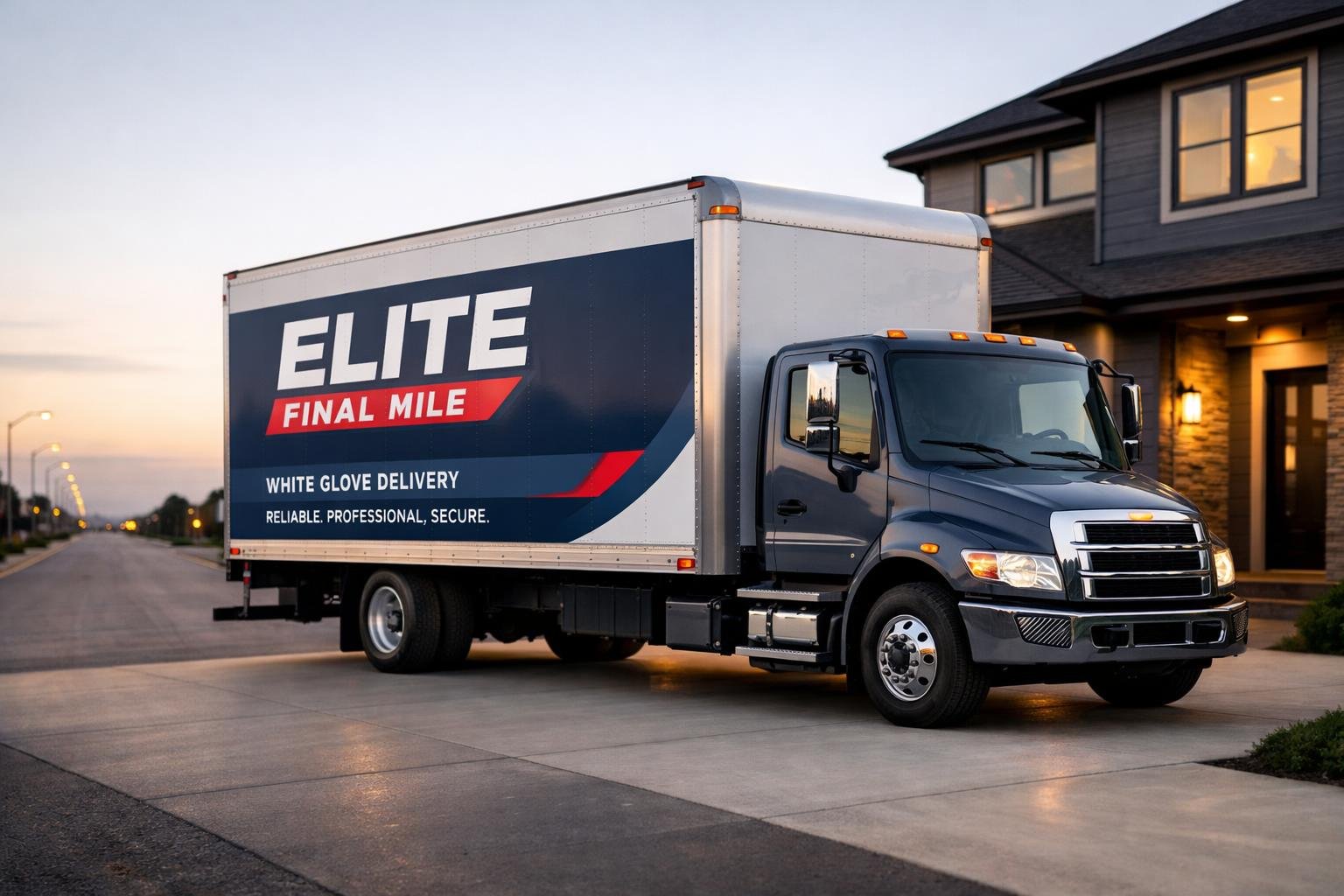
The furniture and appliance delivery firm on your commercial auto book is one of the cleanest cross-sells you have, and you have probably never quoted it. You wrote their fleet. You wrote their general liability. You issue the certificates every time they onboard a new big-box retailer. And the entire time, their delivery roster has been running on 1099 contractors that nobody at your agency has placed coverage on.
This is final mile 1099 insurance, and it is sitting on accounts you already own. Not Amazon DSPs, who get all the attention. The quieter book: the white-glove furniture haulers, the appliance install-and-delivery outfits, the equipment and fixture delivery contractors moving product the last fifteen miles from the distribution center to the customer’s door. They carry sustained 1099 engagement as a core part of how the business runs, and the coverage line that fits it is one your current account team is walking past at every renewal.
Why final mile 1099 insurance is the easiest revenue line you’re missing
Final-mile delivery firms classify under courier and local trucking codes — SIC 4215 (Courier Services Except by Air) and 4214 (Local Trucking With Storage). What makes them a layup for an opportunity-minded producer is the structure of the work. These firms scale delivery capacity up and down with retail seasonality, and they do it with independent contractor drivers and two-person delivery teams rather than a fixed W-2 payroll. The 1099 roster is not an edge case for them. It is the operating model.
You already see the evidence in your own file. When that furniture delivery account asks you to add or drop units off the commercial auto schedule three times a year, that churn is the contractor roster breathing in and out with peak season. Every one of those drivers is performing physical, injury-exposed work — lifting, stair carries, liftgate operation, install — with no occupational accident coverage behind them unless someone placed it. On most of these accounts, no one has.
That gap is your opening. The account is already yours. The relationship is already yours. The certificate is already in your system. What you are adding is a coverage line the incumbent producer on the account never thought to quote, which means you can bring it to your own renewal as added value, or bring it to a competitor’s account as the reason their client should move the whole file to you.
The account types hiding in your commercial book
Walk your commercial auto and BOP book and flag anything that moves product the last leg to a consumer. The pattern repeats across more verticals than producers expect:
- White-glove furniture delivery — two-person teams doing in-home placement and assembly, almost always contracted.
- Appliance delivery and install — haul-away, hookup, and install crews running as independent operators for regional retailers.
- Equipment, fixture, and exercise-equipment delivery — specialized heavy-item final mile with a rotating contractor bench.
- Building-supply and big-box final mile — the install and delivery contractors moving product for Lowe’s, Wayfair, and regional home-goods retailers.
Each of these is an existing commercial account for someone. If it is on your book, it is a cross-sell. If it is on a competitor’s book, it is a wedge. The common thread is a branded final-mile operation running on contractors who do physically demanding work, and a coverage line that maps directly onto that exposure. You can see the full picture of where this sits on a given account by running it through the 1099 Exposure Identifier before your next renewal meeting.
What the program actually adds for the account
The WORK Program through 1099 Protect is built for exactly this distribution shape. For the final-mile firm, occupational accident coverage protects the contractor drivers and delivery teams who are doing the injury-exposed work, and it gives the hiring firm a documented paper trail of contractor independence that strengthens the account’s position if its classification practices are ever questioned. That last point is real, but it is the backdrop, not the pitch. The pitch is that you are adding a coverage line to an account you already service, on a workforce that has been uncovered the whole time.
For you as the producing agency, the mechanics are built to make the placement fast and the account stickier:
- Quote and bind in hours, not days — you do not wait on a slow program desk to get an account moving.
- Real-time, pay-as-you-go billing — coverage scales with the contractor roster the same way the account’s delivery capacity does, with no year-end premium audit surprise.
- 3% credit card and ACH processing fees passed to the insured via ePayPolicy, so the billing line does not eat into the account economics.
- All-states availability without state-by-state endorsement gymnastics, which matters the moment a regional delivery firm crosses a state line.
- White-label, co-branded collateral so the program presents under your agency’s name, not ours. We are the program provider behind you, never in front of you.
That co-branding point is worth sitting with. You are not handing your client off to a carrier and hoping they remember who sent them. The enrollment materials, the sales sheet, the contractor-facing collateral carry your brand. The account experiences this as something your agency built for them. You can see how that gets packaged on the agency solutions side.
Why this account gets harder to unwind once you place it
The strategic value here is not the premium on a single OAI placement. It is what the placement does to the relationship. Once your agency is the one covering the final-mile firm’s contractor roster — with billing that flexes against their seasonal capacity and enrollment that runs under your brand — you have woven yourself into how the account operates week to week. A competitor trying to take that account now has to unwind a coverage line that is tied to the client’s actual delivery workflow, not just rebid a fleet policy. You have made the relationship harder to move, and you did it by adding value rather than cutting price.
This is also your sharpest tool on new logos. When you are competing for a furniture or appliance delivery account that an incumbent shop already writes, the incumbent almost certainly has not placed occupational accident coverage on the contractor roster. You walk in with the one thing they missed. That is the difference between bidding the same fleet policy a point cheaper and bringing a coverage line that demonstrates you understand the account’s actual operating model better than the agent who has held it for three years.
The cross-sell math
Run the numbers on a mid-sized final-mile delivery account. The occupational accident premium on the contractor roster is a modest add relative to the commercial auto and general liability lines you already place on that same account — typically a few thousand dollars of new premium sitting next to a fleet and GL program many times its size. You are not chasing a new logo, funding a marketing campaign, or fighting for a first appointment. The relationship exists. The certificate is already in your file. The exposure is already on the account. You are placing a coverage line on a workforce you already insure the trucks for.
That is the entire case. A small, fast-binding premium add, on an existing account, on a workforce that has been uncovered the whole time, under your own brand, that makes the relationship harder to lose. Getting appointed to write it takes days, not a quarter — you can start the process on the final mile and last-mile program page or go straight to become an agent. Then pull your commercial auto book, flag every account that moves product the last fifteen miles, and start with the one whose certificate you renewed last month.