
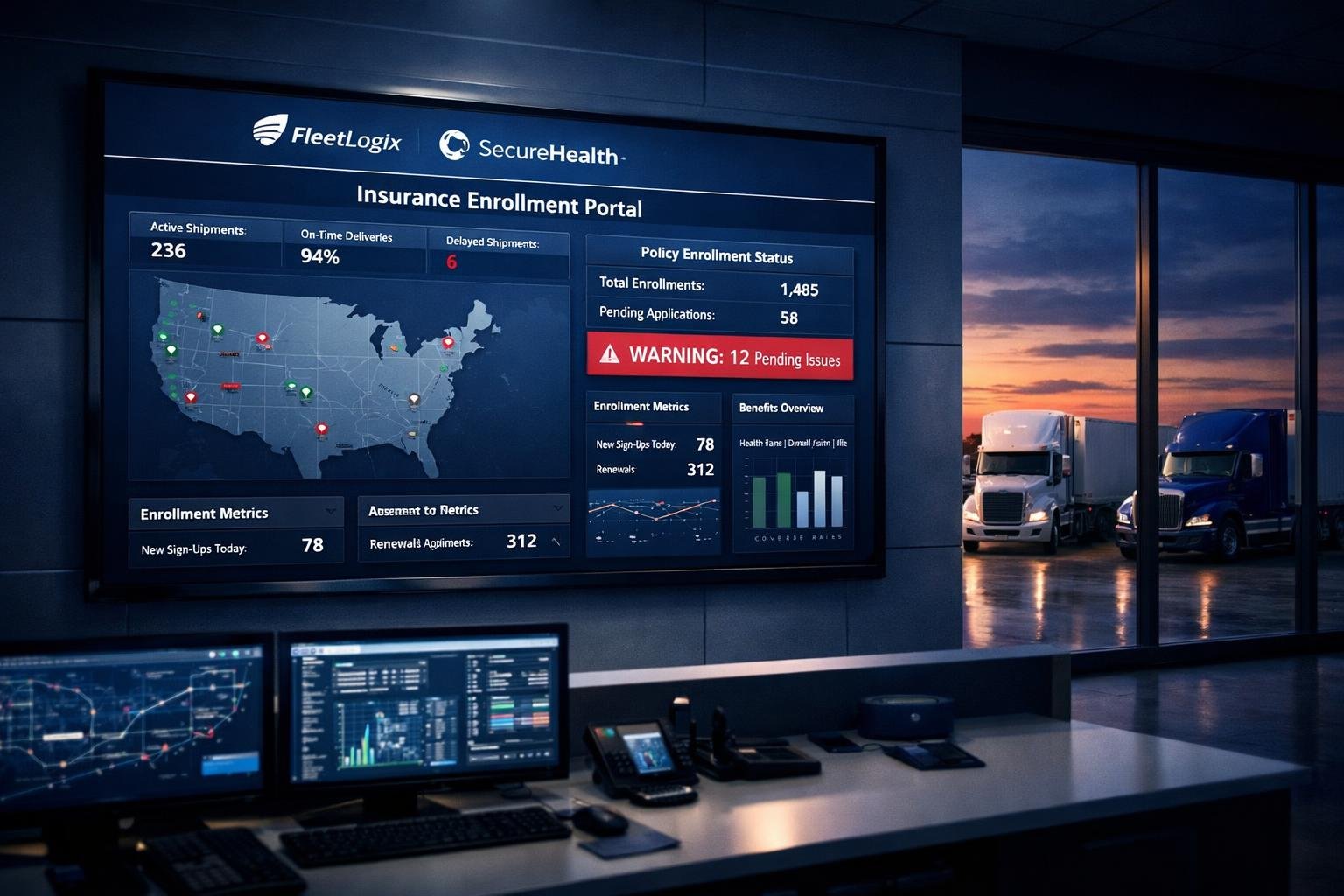
An agency sent us a logo on a Tuesday morning. By Tuesday afternoon, their co-branded insurance storefront was live and taking applications. Same brand on the front, our automated rails behind it, binding coverage in hours. That is what going live looks like on this platform — not a quarter-long integration project, not a stack of carrier paperwork, but a working storefront with the agency’s name on it before the end of the business day.
If you run or produce at a commercial agency, you already know the usual speed of standing up a new program: weeks of carrier onboarding, a marketing team you have to commission, forms that bounce between PDF editors, and a billing setup that nobody wants to own. The 1099 Protect machine collapses all of that into a single day. This post walks through exactly what the agency sees from its own seat when the storefront goes live.
The co-branded insurance storefront, live in a day
The centerpiece is the storefront itself. You send us your logo and your colors. We stand up a co-branded enrollment page — your brand on every header, your producer pre-filled on every form, your phone number on the confirmation. To the business owner filling it out, it is your agency’s page. There is no “powered by” badge stealing the relationship. You are the front; we are the rails underneath.
The reason this matters is distribution. A program you have to explain is a program that stalls. A storefront you can text to a prospect, drop in an email signature, or hand off at a renewal meeting is a program that moves. The co-branded page turns a conversation into an application without a single back-and-forth, and it does it under your name. When we say live in a day, we mean a working, branded, application-accepting page — not a contract you signed that will “go live next month.”
24 pieces of agency-branded collateral, delivered day one
A storefront with no marketing around it is a parked car. So the machine ships you a full library on day one: 24 pieces of print-ready, agency-branded collateral — driver-facing flyers, owner one-pagers, explainer sheets — all carrying your logo and your colors, ready to send or print. You are not waiting on a designer, and you are not paying for one. The same co-branded collateral engine that builds the library lets you spin up a fresh sheet for a specific prospect in minutes.
This is the difference between a carrier handing you a product and a platform handing you a go-to-market. The collateral is the connective tissue between the storefront and your existing book. You walk into a renewal with a one-pager that already has your name on it, and the cross-sell tells itself.
Phone-first applications, quote and bind in hours
The application is built phone-first, because the people enrolling are rarely sitting at a desk. An owner can complete it from a job site in a few minutes on a phone. There is no paper packet, no wet signature mailed back, no “we’ll process it when it lands.” The form feeds straight into the rails, and we quote and bind in hours, not days.
Speed-to-bind is not a vanity metric. Every hour a quote sits is an hour the prospect can shop you. When the storefront accepts an application in the morning and coverage is bound by the afternoon, the window for a competitor to slide in simply never opens. That is closing leverage you hold because the machine is fast, not because you chased it.
Real-time, pay-as-you-go billing — and a new revenue line
Billing runs real-time and pay-as-you-go. No monthly premium audit cycle, no true-up surprises, no back office reconciling estimates against reality. Exposure is captured as it happens and billed accordingly. For the account owner, that means they pay for what they actually run. For your agency, it means a program that bills itself.
Here is the part producers tend to circle back to: through ePayPolicy, the 3% credit card and ACH processing fee is legally passed to the insured. That is a cost most agencies quietly eat. On this platform it becomes a recovered revenue line — no new staff, no new software for you to run, no new process to babysit. The machine handles the collection; you keep the margin you were losing.
All-states availability, no state-by-state endorsements
Because the program operates under federal preemption, you get all-states availability without chasing state-by-state endorsements. An account with contractors moving across jurisdictions does not turn into a filing project. The storefront writes the same way in one state or twenty, and you are not the one untangling the map. For an agency with clients that operate regionally or nationally, that removes one of the most tedious blockers to placing the coverage at all.
Occupational Accident Insurance for the 1099 workforce
The product underneath the storefront is Occupational Accident Insurance — OAI — built for 1099 independent contractors. A quick clarity point that keeps the conversation clean: Workers’ Comp is for W-2 employees. The WORK Program is for the 1099 economy. They are legally distinct tools for legally distinct workforces. You are not replacing anything on the account; you are adding the coverage that the 1099 side of the workforce was always supposed to have. Quietly, the program also builds a documented paper trail of contractor independence — useful backdrop for the owner, but the headline is the growth it puts on your book.
Why agencies put their brand on the front
There is a strategic reason the storefront is co-branded rather than white-labeled to us. Every application that comes through it reinforces your relationship with the account, not ours. The owner sees your name when they enroll, your name on the confirmation, and your producer’s number when they have a question. That keeps the account sticky to your agency at renewal, which is where retention is actually won or lost.
It also changes how you sell. A co-branded insurance storefront is a closing tool, not just a fulfillment channel. When you are competing for a new logo, the ability to text a prospect a branded enrollment page and have coverage bound the same day is leverage your competition does not have. You are not promising a program that will exist someday; you are showing one that works right now, with your name on it. For producers, that shortens the sales cycle and raises the close rate on accounts that carry 1099 exposure — which, across a typical commercial book, is more of them than most agencies realize.
And because the rails are shared infrastructure, none of this scales your overhead. One co-branded storefront or fifty accounts running through it costs you the same operational footprint: effectively none. The platform absorbs the enrollment, the billing, and the servicing. Your agency keeps the brand, the relationship, and the revenue.
What going live actually looks like
Put the pieces together and the day-one picture is concrete. You send a logo. We stand up a co-branded storefront. You get 24 branded marketing pieces in hand. Owners enroll from their phones in minutes. Quotes bind in hours. Billing runs itself in real time, and the 3% fee comes back to you instead of leaving. Multiple agencies are already live and writing on the platform, and same-day onboarding is the standard, not the exception.
None of this requires you to become a 1099 specialist overnight, rebuild your operations, or transfer a book. The rails are already built. Your job is to put your brand on the front and point your existing relationships at the storefront. The machine does the rest.
If you want to see what your agency’s storefront looks like standing up, the move is simple: get appointed and we stand it up. Send the logo, and watch the branded page take its first application the same day.