
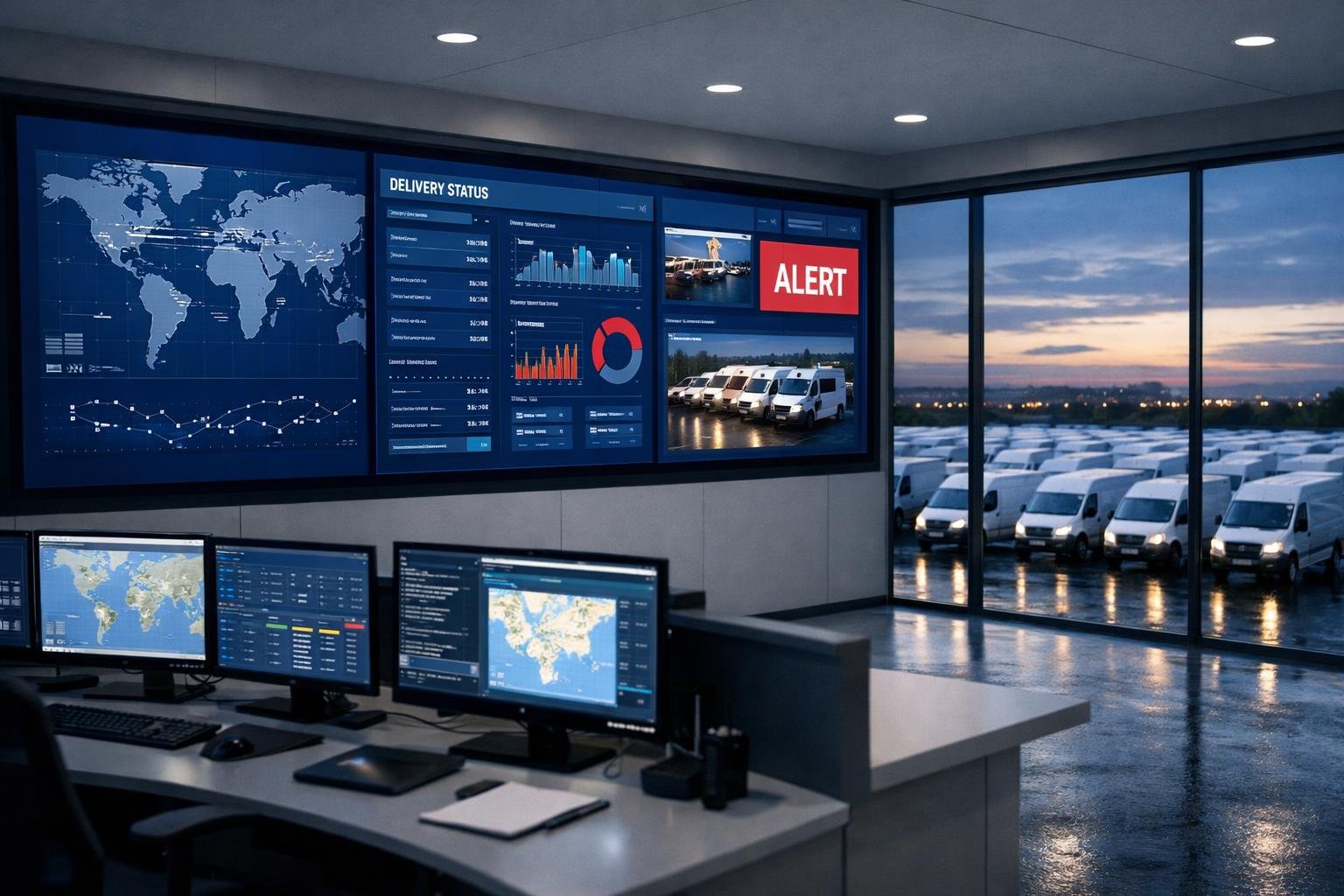
A commercial P&C agency in the Southeast spent five months chasing a regional last-mile delivery company. Good relationship, competitive pricing, a solid service story — and no movement. The incumbent held the general liability, the commercial auto, and the umbrella, and the prospect saw no reason to disturb any of it. Then the producer added one line to the proposal: a co-branded Occupational Accident Insurance program for the company’s roster of 1099 contract drivers. The account closed within the week. That is closing leverage, and it is the most repeatable win we see agencies produce on our platform.
The story is anonymized, but the pattern is not. Multiple agencies are live on the 1099 Protect platform right now, and the same sequence keeps showing up: a stalled commercial prospect, a producer who brings something the incumbent cannot quote, and a buying decision that suddenly gets easy. Here is how the win actually unfolded — and how to build the same closing leverage into your own pipeline.
The Stalled Account Every Producer Recognizes
The prospect ran roughly sixty 1099 contract drivers doing residential delivery and installation work across three states. The agency had quoted the account twice. Both times the pricing landed within a few points of the incumbent, and both times the owner said some version of the same thing: “You’re close, but not close enough to justify the paperwork.”
That sentence is the graveyard of commercial pipelines. When your quote and the incumbent’s quote look alike, the incumbent wins by default — switching costs money, time, and attention, and a marginal premium difference does not pay for any of it. Price-cutting deeper only erodes your own commission while teaching the prospect to shop you next year.
What breaks the stall is not a sharper pencil. It is a line on the proposal the incumbent cannot match. That is where closing leverage comes from: not from beating the other agency’s number, but from changing what the proposal contains.
Where the Closing Leverage Came From
A Product the Incumbent Couldn’t Quote
The producer had recently gotten appointed with 1099 Protect. During a routine review of the stalled file, he noticed what the incumbent’s package ignored entirely: the sixty contract drivers at the center of the prospect’s operation. The business ran on 1099 last-mile and installation drivers, and nobody had ever offered the owner a coverage program built for that workforce.
So the third proposal looked different. Same general liability, same commercial auto — and a new section: a co-branded Occupational Accident Insurance program for the contractor fleet, with phone-first digital enrollment each driver could complete in about five minutes, real-time pay-as-you-go billing that tracked the active roster, and a documented paper trail of contractor independence as a built-in byproduct of enrollment.
The owner had never seen the product before. The incumbent had never mentioned it. In one page, the conversation moved from “your quote versus their quote” to “the agency that covers my whole operation versus the agency that covers part of it.”
Co-Branded, Not Borrowed
Here is the part that made the proposal land as the agency’s own win rather than a referral to somebody else: the program carried the agency’s brand. The enrollment storefront ran the agency’s logo and colors with the producer pre-filled on every application. The collateral in the proposal packet — driver-facing flyers, owner-facing one-pagers — was print-ready and agency-branded, delivered the day the agency onboarded. From the prospect’s chair, this was simply a capability his potential new agency had and his current one did not.
That is the quiet mechanics of closing leverage on our platform. The reader’s agency is the storefront; 1099 Protect is the rails behind it. The producer never had to say “let me introduce you to a third party.” He said, “we have a program for your drivers,” and the platform made that sentence true.
The Week It Closed
The timeline is the proof. The producer walked the owner through the OAI program on a Tuesday phone call. Enrollment questions were answered on the spot because the application is phone-first by design — drivers complete it from the cab, no paper packets, no wet signatures chasing sixty contractors across three states.
Quoting happened in hours, not days. By Thursday the owner had numbers for the full package. By the following Monday, the agency held a signed broker-of-record letter for the entire account — general liability, commercial auto, umbrella, and the new OAI program on top.
Five months of stalled follow-ups, resolved in six business days. The premium on the package lines barely moved from the previous two quotes. What changed was the shape of the proposal, and the shape of the proposal is something every agency on the platform controls.
Why Closing Leverage Beats Price Cutting
Run the comparison the way a principal would. Cutting price to win a stalled account costs commission on day one and resets the account’s expectations forever. Closing leverage does the opposite on every axis.
First, the OAI line is additive revenue. It is a new premium line on the account with its own commission, not a discount carved out of the existing lines. The producer earned more on this account than either of his first two quotes would have paid, because the winning proposal was bigger, not cheaper.
Second, the leverage compounds into retention. An account holding four lines with you, one of which no competing agency in the region can casually replicate, does not get shopped the way a two-line account does. The enrollment storefront carries your brand in front of the client’s drivers all year. Real-time billing means the client interacts with your program monthly instead of remembering you only at renewal.
Third, it is repeatable across the book. This producer used the program to break a stall on a new logo. The same appointment lets him walk the program across every existing account with a 1099 workforce — delivery fleets, installers, couriers — as a cross-sell with no new market to hunt down. The agency solutions overview maps where the product fits across a standard commercial book.
Building Closing Leverage Into Your Own Pipeline
The replication path is short because the machine is already built. Getting appointed takes days, not quarters. Your co-branded storefront — logo, colors, producer pre-filled — goes live in a day; one agency sent us a logo on a Tuesday morning and had a branded enrollment page taking applications that afternoon. The twenty-four pieces of agency-branded collateral arrive with it, so the proposal packet upgrade is ready before your next pipeline review.
From there, closing leverage is a matter of looking at your stalled deals the way this producer looked at his: which prospects run 1099 workforces the incumbent has ignored? Last-mile fleets and installation crews are the obvious ones, but the same stall-breaker works on courier operations, regional haulers, and service companies running contractor benches.
Quoting is fast enough to use inside a live deal. Hours, not days, means you can introduce the program in a Tuesday meeting and have numbers in front of the owner before the week ends — which is exactly the window in which stalled deals either move or go back to sleep.
The Takeaway for Your Agency
Price gets you compared. Closing leverage gets you chosen. The agency in this story did not out-discount the incumbent; it out-built them, with a product line the incumbent could not put on paper and a co-branded delivery machine that made the whole operation look like the agency’s own infrastructure.
Multiple agencies are already writing with that leverage. If your pipeline has a stalled account sitting on a 1099 workforce, the fastest move available is to get appointed and put a line on your next proposal that the other agency cannot match.