
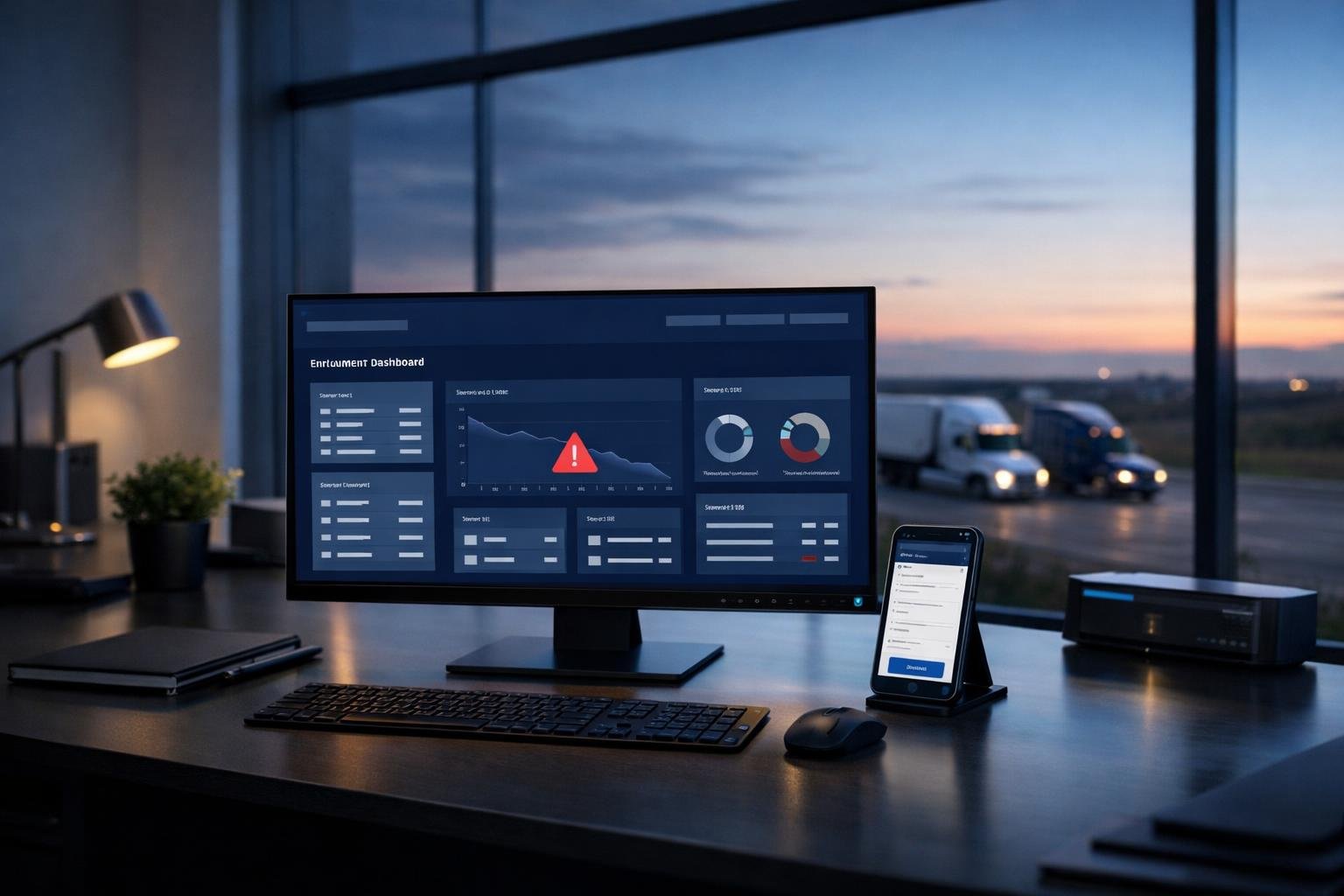
For twenty years, the agency with the biggest back office won the commercial account. More CSRs meant more applications keyed, more endorsements chased, more premium audits reconciled. Scale was a headcount game, and small shops competed on relationships because they could not compete on throughput. Zero-touch OAI distribution ends that arrangement. When a co-branded storefront takes the application, a phone does the enrollment, and billing runs in real time, a three-producer agency places Occupational Accident Insurance on 1099 workforces with the same throughput as a national broker. The size advantage did not shrink. It flipped.
The Constraint Was Never Carrier Access. It Was Producer Hours.
Ask a principal why the agency does not write more 1099 workforce coverage and the honest answer is rarely “we cannot get appointed.” It is “we do not have the hours.” Every OAI placement under the old model carried a hidden labor bill: a paper application to walk the account owner through, a roster to key by hand, a certificate to issue, a monthly audit to reconcile against payroll the client never sends on time. The commission on a mid-sized account did not cover the CSR time it consumed. So the agency wrote it once, for a client who insisted, and quietly stopped offering it to everyone else.
That is a throughput problem, not an appetite problem. Throughput problems get solved by rails, not by hiring. And once the rails exist, the agencies that were starved for hours are the ones with the most to gain.
What Zero-Touch OAI Distribution Looks Like From the Agency’s Seat
The phrase gets used loosely, so here is the operating definition: the agency’s brand is on the front of every touchpoint, the program provider’s automation runs every step behind it, and no producer or CSR touches an application between “the client said yes” and “coverage is bound.” Four pieces make that real.
A co-branded storefront, live in a day
The agency sends a logo and a color. By that afternoon there is a branded enrollment page with the producer’s name pre-filled on every form. One agency sent us a logo on a Tuesday morning; Tuesday afternoon their page was taking applications. That page is the storefront. The account owner sees the agency, the participant sees the agency, and the agency owns the relationship on both ends. Agency-branded collateral ships the same day, twenty-four print-ready pieces, so the producer walks into the next meeting with something to hand across the table.
Phone-first enrollment
The participant, meaning the 1099 driver, nurse, engineer, or consultant doing the work, enrolls from a phone in about five minutes. No PDF, no scanner, no CSR retyping a handwritten form. The account owner sends a link and the roster fills itself. Quote and bind happen in hours, not days, because nobody is waiting on paper to move between desks.
Real-time, pay-as-you-go billing
Coverage bills as the roster changes. Add a participant and the bill moves; remove one and it moves back. There is no annual premium audit because there is nothing to audit. The count is always current. For the agency, that means zero reconciliation hours and zero awkward audit-bill conversations at renewal.
Fee pass-through
The 3% card and ACH processing fee passes legally to the insured through ePayPolicy. The agency stops absorbing processing costs, and on a book of any size that line stops being a rounding error. No new back office was hired to collect it.
Why the Size Advantage Flipped
Put those four pieces together and the labor bill on an OAI placement drops to roughly zero. That change is not neutral across agency sizes. It removes exactly the thing large agencies were being paid for.
A regional broker with forty CSRs built that headcount to absorb manual work. When the manual work disappears, the headcount becomes overhead, and overhead has to be fed. A three-producer shop carries none of it. The small agency can offer a co-branded 1099 program to every commercial account on its book, the staffing client, the home health agency, the IT consultancy, the last-mile fleet, with the same speed and the same polish as the broker down the street, and it keeps more of the margin because it never carried the payroll.
Speed compounds the effect. In a market where the incumbent placement still takes days to bind, the agency that can quote at lunch and bind by dinner is not competing on price. It is competing on a category the larger shop cannot enter without rebuilding its workflow. The relationship advantage small agencies always had did not go away either. It just stopped being the only card they held. Now the principal who knows every client by first name also has the fastest bind in the market, and that combination is very hard to compete against.
Where This Is Heading
Three shifts are already underway. The agencies positioning for them now will own the category in their markets by the time the rest catch up.
Enrollment moves to the worker’s phone as the default. The 1099 workforce is mobile by definition. A contractor who runs a business from a phone will not fill out a paper application, and increasingly will not tolerate a portal built for a desktop in 2011. The program that meets participants on the device they already use wins the enrollment, and the agency distributing that program wins the account.
Billing goes real-time everywhere it can. Premium audits exist because carriers could not see the roster. Once the roster is a live data feed, the audit is dead weight. Account owners who have experienced pay-as-you-go billing on one line of coverage start asking why every other line still runs on estimates and true-ups. The agency that brought them the real-time line gets the credit for the question.
Distribution splits into brand and rails. The agency owns the brand and the relationship; the program provider owns the automation. That is the model that lets a small agency behave like a national one without becoming one. Program providers who try to sell around the agency lose the relationship. Agencies that try to build the rails themselves lose the year. The partnership is the structure, and the agencies that pick a provider with working rails, rails built for commercial and professional 1099 accounts and not only trucking, will be distributing across their whole book while competitors are still scoping a webpage.
What This Means for Your Book
Three practical consequences for a principal or producer reading this on a Friday.
First, every commercial account you already write that engages 1099 talent on a sustained basis is a cross-sell you can now afford to make. The labor cost that used to make it not worth the commission is gone, and the certificate is already in your file.
Second, the co-branded storefront is closing leverage on new logos. Walking into a staffing firm or a delivery contractor with a live, branded enrollment page and a stack of print-ready collateral is a different meeting than walking in with a carrier brochure. The prospect sees an agency that already has the machine running.
Third, retention becomes structural. A client whose roster, billing, and certificates all run through your branded page has very little reason to shop the account, because the friction they would have to re-create somewhere else is exactly the friction you removed. The documented paper trail of contractor independence that the platform builds along the way is a quiet bonus the client’s counsel will appreciate later; it is not the reason they stay. The reason they stay is that everything works.
None of this requires a bigger office. It requires an appointment and an afternoon.
Going Live
Multiple agencies are already writing on the platform, and same-day onboarding is the standard. If your agency has been leaving 1099 workforce coverage on the table because it did not pencil out on hours, the math changed. Get appointed, send a logo, and see what your storefront looks like by the end of the day.