
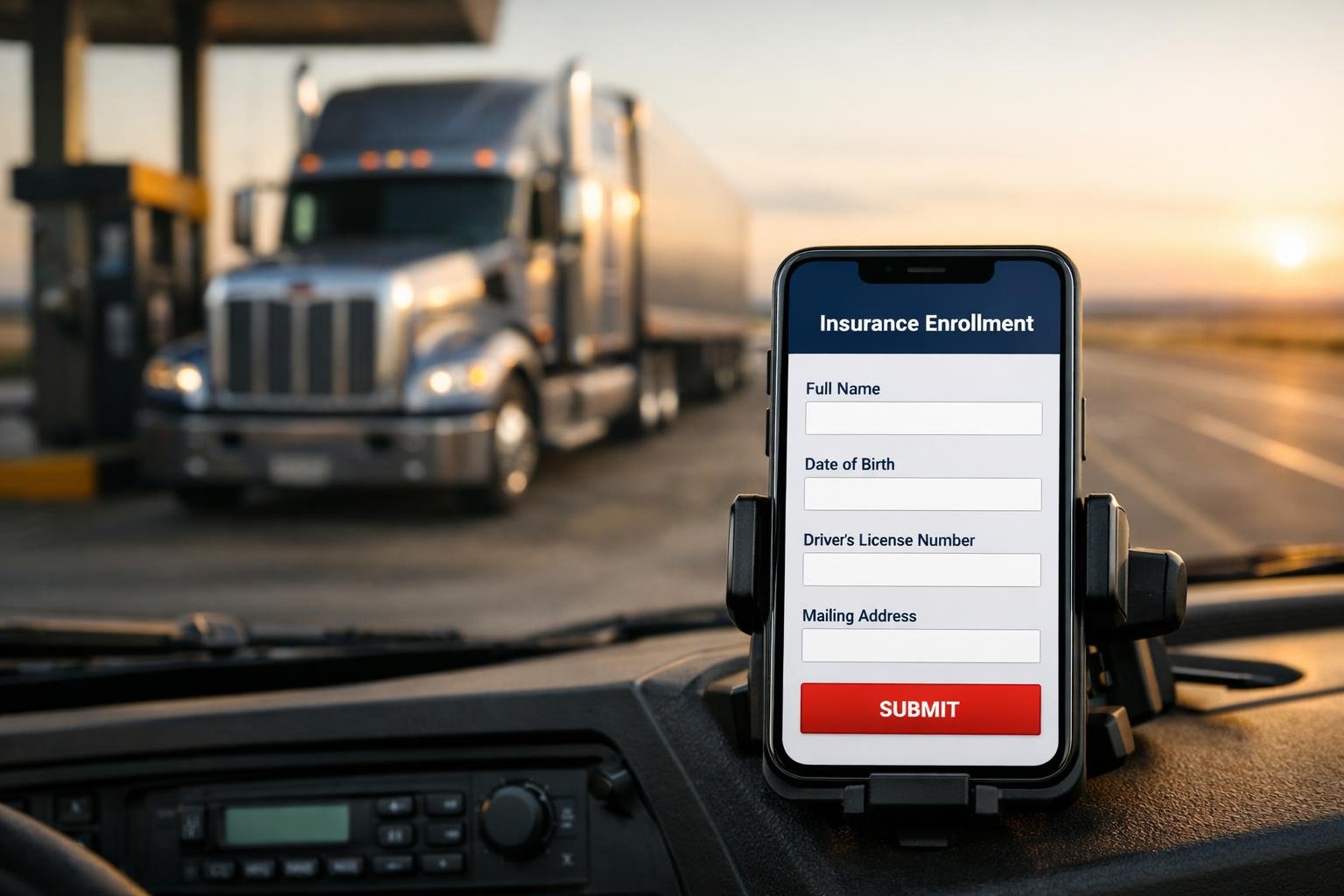
A producer sent a prospect one link at 10:15 on a Thursday morning. By 2:30 that afternoon the prospect’s owner-operators were applying from their phones in a terminal parking lot. Coverage was bound before the producer left the office. No proposal document. No quote letter. No “let me put something together and get back to you.”
That is the OAI sales process on 1099 Protect’s rails, and it is the single biggest change in how agencies place Occupational Accident Insurance. The proposal step, the one that used to eat a producer’s afternoon and give the prospect a week to cool off, is gone. The link does the job the proposal used to do, and it does it while the producer is already on the next call.
Why the proposal was the slowest step in the OAI sales process
Walk through the traditional OAI sales process from the agency’s seat. First call. Gather fleet details. Build a proposal. Send it. Wait. Follow up. Get a verbal yes. Send paper applications. Chase signatures. Submit to the carrier. Wait for a bind confirmation. Each handoff is a place the deal can sit, and every day it sits, the prospect keeps talking to other agencies.
None of those steps exist because the coverage needs them. They exist because the old rails needed them. A proposal was how you carried information from your desk to the prospect’s desk. Paper applications were how you carried information back. The carrier’s queue was where the information waited its turn.
When the rails change, the steps disappear. On 1099 Protect’s platform, the proposal, the application, and the bind all live at the same address: the agency’s co-branded storefront. The OAI sales process shrinks to the part that actually needs a producer, which is the conversation.
What one link actually carries
The link is not a brochure page. It is the agency’s own storefront: their logo, their colors, their producer’s name pre-filled on every form. When the prospect opens it, they see the agency they just spoke with, not a program provider they have never heard of. That matters, because the Account Owner is deciding whether to trust the agency, and the storefront confirms the agency is the one running the show.
Behind the branding sit two phone-first applications, and together they are the entire OAI sales process compressed into one screen.
The Account Application: the owner enrolls the business from a phone
The Account Owner, the hiring business, completes the Account Application in about five minutes from a phone. Business details, contact and billing information, the operating footprint. That is the enrollment that used to be a proposal, a signature packet, and a follow-up call. Now it is a form the owner finishes while standing at the fuel island.
The Driver Application: every participant enrolls themselves
Each participant, the 1099 driver or contractor, completes their own Driver Application from their own phone. The Account Owner does not collect paperwork, the producer does not type anyone’s information into a portal, and nobody photographs a signature page. The owner forwards the link, the drivers apply, and the applications land where they need to land.
Producer attribution, already handled
Because the producer is pre-filled on every form, every application that comes through the storefront credits the right person. A producer who sends the link on Thursday and is out of the office on Friday still owns every driver who applied over the weekend. There is no attribution step left in the OAI sales process, because the link already did it.
Quote and bind in hours, billed as they go
Once the applications are in, coverage is quoted and bound in hours, not days. The prospect that was applying at 2:30 is a bound account by end of day. That speed is the back half of the OAI sales process, and it is what actually closes the deal: the owner watches the agency deliver on the same afternoon they said yes, which is a first impression most incumbents cannot match.
Billing runs the same way. Real-time, pay-as-you-go, with premium tracking the roster as drivers come and go. There is no monthly premium audit for the producer to explain and no year-end true-up to defend at renewal. And because the 3% credit card and ACH processing fee is legally passed to the insured through ePayPolicy, the agency picks up a new revenue line without adding a single back-office task.
For trucking agencies, the link also solves the map. Coverage is available in all states without state-by-state endorsements, so a carrier running Texas to Ohio to Georgia enrolls once. The producer never has to say “let me check whether we can write that state.” If your book is heavy on motor carriers and owner-operators, the trucking program page shows what that looks like from the driver’s seat.
The flyer is the same link on paper
The OAI sales process does not always start on a screen. Sometimes it starts at a terminal, a carrier safety meeting, or a truck stop counter. So the 24 pieces of agency-branded, print-ready collateral that ship on day one carry the same storefront on a QR code. Driver flyers point to the agency’s driver page. Owner one-pagers point to the agency’s owner page.
A producer can leave a stack of flyers at a dispatch office and walk out, and drivers who scan the code are applying under that producer’s name that afternoon. The flyer is not marketing that leads to a sales process. The flyer is the OAI sales process, printed. You can see the collateral built around your own agency’s branding at the custom sales sheet generator.
What changes in a producer’s week
Take the hours a producer spends building proposals, chasing signatures, and re-keying applications, and give them back. That time turns into first calls. The OAI sales process becomes: have the conversation, send the link, move on. The rails handle the rest, and the producer finds out an account is bound the same way the owner does.
Three things follow from that for the agency.
More at-bats. A producer who no longer spends afternoons on proposals can run more first conversations per week. The link means every conversation ends with a concrete next step the prospect can take in five minutes, not a document they will read later.
Stickier accounts. An Account Owner whose drivers enroll through the agency’s branded page, whose roster changes happen from a phone, and whose billing never surprises them has very little reason to shop at renewal. The storefront becomes part of how the client runs their fleet, and the OAI sales process quietly turns into a retention process.
A cleaner close on new logos. When a commercial prospect asks how the OAI sales process works, the producer sends the link during the call. The prospect sees the agency’s brand, a five-minute application, and same-day binding. The competing agency is still promising to send a proposal.
Where the paper trail fits
Every application that runs through the storefront produces a documented paper trail of contractor independence, automatically, as a byproduct of the OAI sales process itself. Agencies do not lead with that. It is not the pitch, and it does not need to be. It is the quiet reason an account is easy to keep: the owner has clean records without doing anything extra, and the agency is the one who set that up.
This is what going live looks like
An agency sent us a logo on a Tuesday morning. Tuesday afternoon their branded enrollment page was taking applications. That is the standard, not the exception. Multiple agencies are live and writing on the platform today, and same-day onboarding is how every one of them started.
The OAI sales process you run next quarter can be one link. The storefront, the two applications, the collateral with the QR codes, the real-time billing, the fee pass-through: all of it is stood up by us, branded as you, and live in a day.
If you want that machine behind your agency’s name, get appointed and we stand it up. Or send a DM and we will walk you through the storefront on a call. Either way, your first prospect can have the link by the end of the week.