
If your current Occupational Accident placement still asks you to mail in a paper application and waits four days to bind, you already know what happens when a Department of Labor investigator opens a case file on one of your accounts. Your carrier ships a 4-page certificate, a thin claims log, and a contractor enrollment portal that looks like it was built in 2008. Then your client gets handed a 30-day document request and starts asking why their producer recommended this program.
The audit isn’t the fine. The audit is the event. The fine is downstream of a docket that either holds up or doesn’t, and right now most of the 1099 audit documentation your client will hand over was built by their OAI provider — not by you, and not by their CPA. The quality of that file is the quality of the placement you made.
The Audit Document Request Your Incumbent Can’t Fill
When the DOL Wage and Hour Division opens a misclassification investigation, the request letter that lands on your client’s desk is not a fishing expedition. It is a structured ask: 1099 forms, contractor agreements, payment ledgers, work schedules, equipment ownership records, marketing materials the contractors used, and — increasingly — the benefits architecture extended to the contractor population. The investigator wants to assemble an economic-reality test, and they want it in a digestible package.
Most OAI incumbents serving the commercial market ship none of this. They ship a certificate, a wallet card, and an enrollment URL. The contractor independence file — the actual record that proves to an investigator your client’s contractors run their own books, control their own schedule, and chose to enroll in a third-party benefit — does not exist inside the carrier’s system. Your client builds it themselves, badly, the week the audit lands.
That is the failure mode you are sitting on right now. Not the price. Not the eligibility. The docket.
What Your Incumbent Actually Ships
Pull the contractor file for any active OAI policy your agency has placed in the last 18 months and look at what came back from the carrier. You will find a binder letter with a single effective date, a 4-page certificate of coverage, an enrollment URL that may or may not capture contractor signatures, a claims contact phone number, and possibly a wallet card.
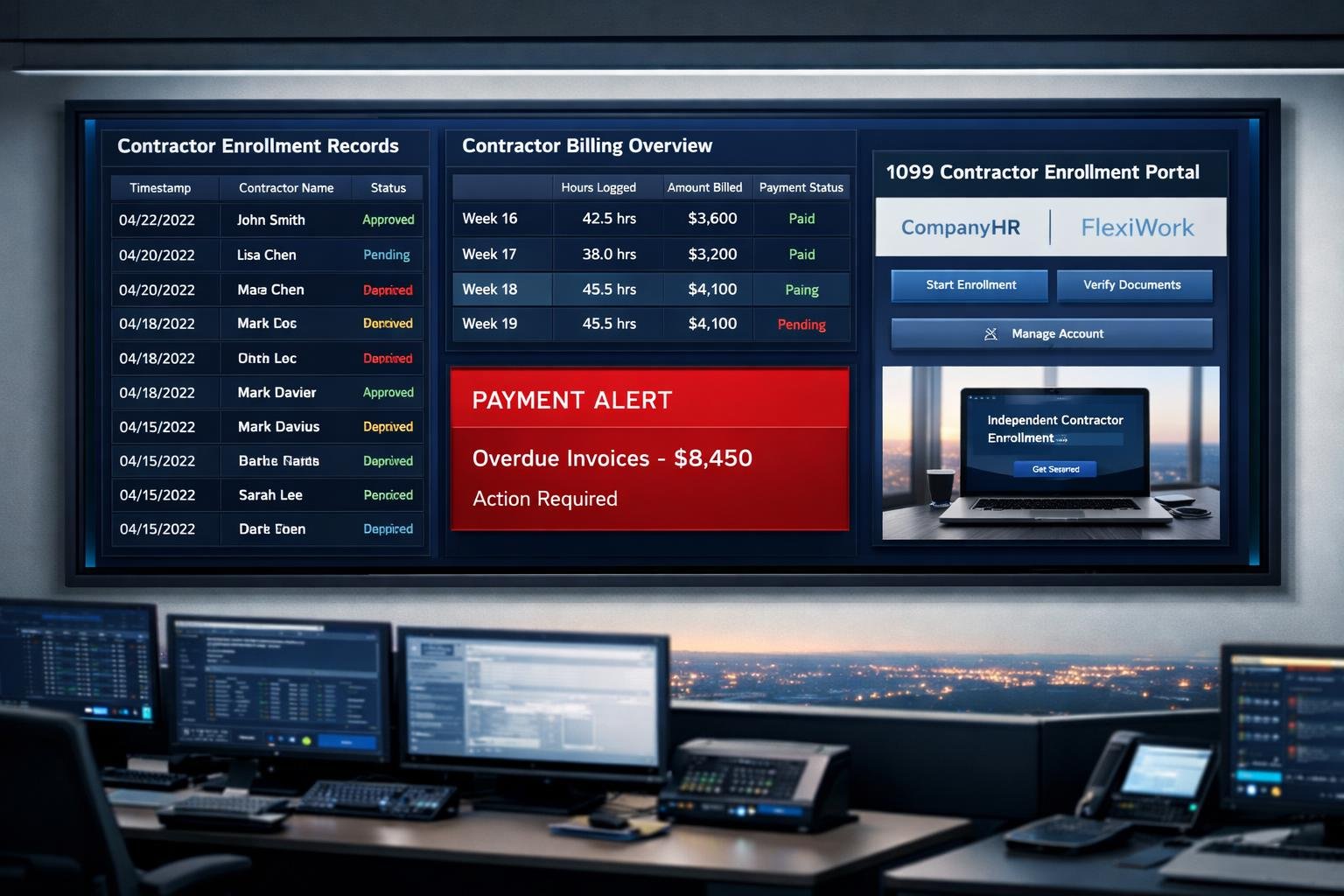
What you will not find: a per-contractor enrollment record with timestamps. A billing ledger that maps premium to specific contractor work weeks. A pay-as-you-go audit trail. A co-branded enrollment portal that documents the contractor’s independent choice to participate. A claims history scoped to that account. A real-time policy management console your client can hand to an investigator.
Why the Tech Stack Is the Tell
The incumbent isn’t shipping these things because the incumbent’s tech stack predates the legal exposure your client is sitting on. The carriers in this space built their systems around quarterly premium audits, not real-time defensibility. When the DOL knocks, your client’s docket is a fax-era file in a modern enforcement environment. The investigator does not care about the underwriting tradition behind the policy. They care whether the documentation is structured, timestamped, and complete.
What a Survivable 1099 Audit Documentation File Looks Like
The 1099 Protect placement ships a different file. Every contractor enrolled to the WORK Program generates a timestamped enrollment record with the contractor’s signature, the date of independent election, and the benefit terms the contractor accepted. Premium runs real-time pay-as-you-go, so the billing ledger maps directly to contractor work weeks — not to a monthly average a carrier estimated and trued up six months later. The portal is co-brandable to your agency, which means the contractor’s enrollment paperwork shows your client’s brand and yours, not a third-party carrier the contractor never heard of.
When the investigator asks for documentation that the contractors are economically independent and chose to enroll in third-party benefits rather than receive them as employer-provided compensation, your client hands over a complete file. That file is what shifts the investigation from “is this misclassification” to “this is properly documented contractor engagement.” The Compliance Firewall framework treats the docket as the deliverable. Your incumbent is treating the certificate as the deliverable. Those are not the same product.
The Bind-Time and Billing Wedge an Audit Reveals
The audit reveals the operational gaps you already knew about and tolerated. Your incumbent takes four days to bind because the application is paper and the underwriting is manual. That delay shows up in the docket as a gap between the contractor’s start date and the coverage effective date — an investigator reads that gap as evidence that benefits were not in place at engagement. We bind in hours, and the enrollment record reflects the actual engagement date.
Your incumbent’s monthly premium audit shows up in the docket as a quarterly true-up that doesn’t tie to actual contractor work weeks. The investigator reads it as evidence the carrier was tracking aggregate payroll, not contractor-level engagement — exactly the pattern that supports a misclassification finding. Real-time pay-as-you-go billing produces a ledger that maps to weekly contractor activity. The investigator stops looking for a payroll pattern because there isn’t one.
The 3% credit card and ACH processing fee your incumbent forces your client to absorb shows up in the docket as a hidden cost that erodes the very margin your client built when they moved to a 1099 workforce. We pass that 3% directly to the insured via ePayPolicy. Your client reclaims it instantly. That isn’t a price wedge — it’s a P&L wedge that closes the gap between what your client thought 1099 engagement would save them and what it actually saves them.
How the Move From Your Incumbent Actually Works
Switching cost is the only reason you are still placing OAI with a carrier whose docket doesn’t survive an audit. Here is what the move actually looks like.
Agency appointment runs in days, not weeks. We do not require a book transfer; you can quote parallel and run new accounts through 1099 Protect while the existing book stays where it is until natural renewal. There is no minimum production requirement to keep the appointment active. You retain the relationship, the BOR, and the client of record across both books while you migrate.
For active accounts, you can move the OAI placement at renewal without disturbing the underlying commercial program. The contractor enrollment data ports cleanly; we do not require contractors to re-paper their enrollment when the placement moves. The first audit a migrated account faces is the first one where the docket actually holds up.
Get appointed at 1099protect.com/become-an-agent and run a parallel quote on your next OAI renewal. If you want to see how the co-branded contractor enrollment portal and the audit-grade documentation file present to your client, the agency solutions overview walks through it. The move takes the same amount of effort as a routine carrier change. The next audit your client faces will tell you whether you made the right call.