
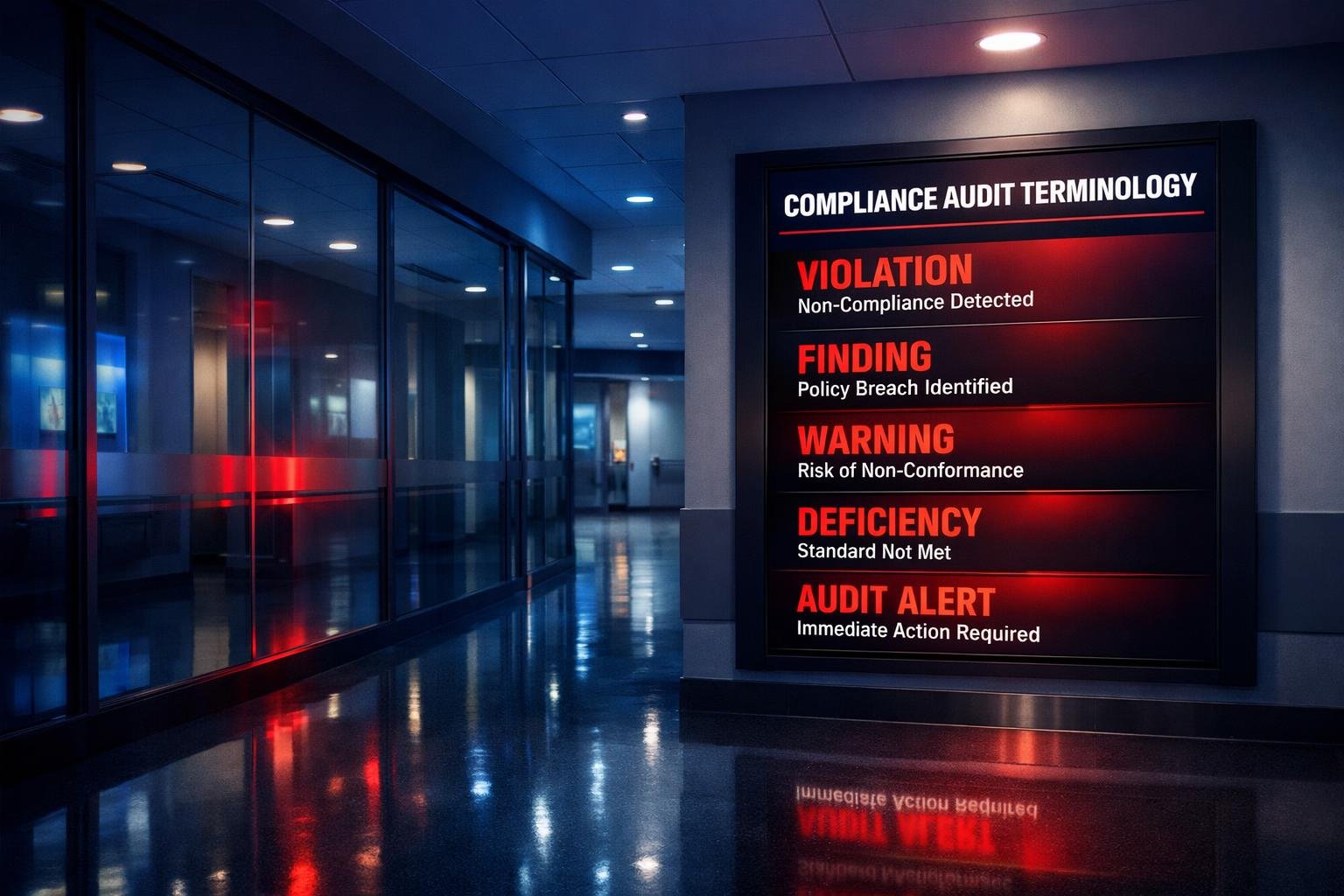
Locum tenens 1099 misclassification has become the single fastest-growing audit category in healthcare workforce enforcement. Hospitals, ambulatory surgery centers, and physician staffing agencies now sit squarely inside the 2026 Department of Labor reclassification crosshairs, and most do not realize how exposed their contracted physician roster has become. The economic-realities test the DOL revived in early 2024 has matured into an aggressive enforcement framework, and locum tenens engagements are exactly the high-margin, high-control arrangements that examiners are taught to dismantle first.
This guide walks executives, medical directors, and risk managers through the mechanics of locum tenens 1099 misclassification, the specific factors that trigger a DOL economic-realities reclassification, and the compliance firewall that keeps hospital systems and their contracted physicians inside the safe harbor.
Why Locum Tenens 1099 Misclassification Is the New Audit Hotspot
The locum tenens market crossed $7.5 billion in annual spend in 2025 and continues to compound at double-digit rates, driven by physician shortages, EMR fatigue, and post-pandemic permanent-staff attrition. Every dollar of that growth is a flashing beacon for DOL enforcement teams who measure productivity by recovered back wages, retroactive overtime, and unpaid employer payroll taxes.
Three structural realities make locum tenens engagements uniquely vulnerable:
- Recurring re-engagements. A locum physician who works seven block shifts per month for fourteen consecutive months looks far less like an independent contractor and far more like a part-time employee in any DOL spreadsheet.
- Hospital-controlled scheduling. Block schedules, mandatory committee participation, and credentialing tied to a specific facility erode the physician’s economic independence.
- Staffing-agency intermediaries. The agency receives a 1099-NEC, but the individual physician is the operational worker. The DOL increasingly treats this as a joint-employer arrangement and pursues both parties.
None of this is theoretical. Five-figure facility-level penalties and seven-figure system-level settlements have already been disclosed in 2025 enforcement summaries.
The Six Economic-Realities Factors Applied to Physicians
Under the revived 2024 framework that became fully operational in 2025, examiners weigh six factors. For locum tenens engagements, the factors that quietly fail most arrangements are:
- Opportunity for profit or loss. A physician paid an hourly bill rate has no real entrepreneurial upside. They cannot meaningfully expand or contract margin.
- Investment in equipment or facilities. The hospital provides the OR, EMR, support staff, and supplies. The physician brings a stethoscope.
- Permanence of the relationship. Consecutive block re-engagements destroy the impermanence argument.
- Nature and degree of control. Mandatory huddles, peer review participation, and call coverage tilt this factor sharply toward employee status.
- Integral part of the business. Patient care is the core service of the hospital. Game over on this factor.
- Skill and initiative. Specialized physician skill is necessary but no longer sufficient on its own.
Five of the six factors point toward employee status before counsel even opens the engagement letter. This is why locum tenens 1099 misclassification cases settle so quickly once the DOL opens a file.
What a DOL Reclassification Actually Costs a Hospital System
The financial exposure is rarely contained to one physician or one facility. Once a single locum reclassification is upheld, examiners almost always expand the audit scope across the broader contracted-physician roster. Typical cost layers include:
- Retroactive employer FICA, FUTA, and state unemployment payroll taxes for the prior three years.
- Unpaid overtime under the FLSA, even for high-earning physicians, unless the highly compensated employee exemption is air-tight.
- Liquidated damages equal to the back wages owed.
- State-level penalties, which in California, New Jersey, and Massachusetts often eclipse the federal exposure.
- ACA shared-responsibility penalties when reclassified physicians retroactively cross the 50-FTE threshold.
- Plaintiff class actions that follow the public DOL settlement within ninety days.
A two-hundred-bed regional hospital with twenty-five contracted locum physicians is realistically exposed to $4 million to $9 million in cumulative liability if a single examiner pulls the thread.
The Compliance Firewall: How to Defend Locum Tenens Engagements
Defending against locum tenens 1099 misclassification is a structural problem, not a paperwork problem. A revised independent contractor agreement, on its own, will not save an arrangement that fails on the economic-realities factors. The defense has to be built into how the work is purchased, scheduled, and insured. The seven anchors of a defensible locum framework are:
- Separate the engagement entity. Engage a physician’s professional corporation or LLC, not the individual, and ensure the entity carries its own malpractice tail and operating overhead.
- Eliminate block exclusivity. Allow the physician to schedule with competing facilities and document the practice.
- Drop mandatory administrative obligations. Committee participation, peer review, and quality metric meetings should be optional and separately compensated.
- Use deliverable-based scope language. Replace hourly rate cards with case-volume or shift-deliverable language wherever clinically defensible.
- Require the physician entity to carry its own occupational accident coverage. This severs the on-site injury exposure that examiners use as evidence of integration.
- Audit credentialing language. Strip facility-loyalty clauses, training mandates, and uniform requirements that read as employer behavior.
- Build a real-time misclassification scorecard. Run every active locum engagement through the six factors quarterly and flag any score that drifts.
The single most overlooked anchor is the occupational accident insurance requirement. When a hospital cannot point to an OAI policy carried by the physician’s own entity, the on-site injury risk falls back on workers’ compensation arguments, and that is where reclassification cases most often crack open. A real OAI policy proves that the physician is operating as a true business with its own catastrophic exposure protection.
Why OAI Is the Anchor of the Compliance Firewall
Occupational accident insurance for 1099 physicians is not workers’ compensation, and it is not malpractice. It is the catastrophic-injury and disability layer that an independent professional carries to protect their own income and to demonstrate genuine economic independence. When a locum physician slips on a wet floor between OR cases, an active OAI policy answers the medical and disability claim, and the hospital is never pulled into the question of whether workers’ comp should have applied.
1099 Protect’s WORK Program was engineered specifically for this scenario. The program issues real-time, pay-as-you-go OAI coverage that a physician entity can bind in hours, with policy documentation that satisfies hospital credentialing departments and stands up to DOL discovery requests. Ask any compliance counsel: the credentialing file that contains a current OAI certificate is the file that does not get expanded into a six-figure audit.
What Hospital Risk Teams Should Do This Quarter
The 2026 enforcement cycle is already underway, and the audit volume curve is steeper than 2024 or 2025. Risk and compliance teams should treat the next two quarters as a closing window and execute a tight remediation sequence:
- Pull the full active locum roster and re-score every engagement against the six economic-realities factors.
- Identify any physician on three or more consecutive block re-engagements. Those are first in the audit queue.
- Require updated credentialing files with active OAI certificates from every locum entity, with a sixty-day grace period.
- Rewrite the standard locum engagement template to remove control-language landmines.
- Brief the executive team and the audit committee on the projected exposure window and the remediation timeline.
For agencies and brokers serving healthcare systems, the conversation has shifted. The buyer is no longer asking what OAI costs. The buyer is asking how fast OAI can be placed across the entire locum roster before the audit notice arrives. Agents who can answer that question with a binding pay-as-you-go solution own the placement.
Closing the Gap Before the Audit Letter Arrives
Locum tenens 1099 misclassification is not a future problem. It is the current operating environment, and the institutions that move first are the ones that avoid the seven and eight-figure remediation cycles already documented in the public enforcement record. A defensible locum framework is built from contract structure, scheduling discipline, credentialing rigor, and OAI coverage, and OAI is the anchor that holds the rest of the architecture in place.
Hospitals, ambulatory surgery centers, and physician staffing agencies that want to lock down their compliance firewall before the next 2026 enforcement wave can request a WORK Program quote or review the full 1099 Protect compliance overview to map their current exposure and bind coverage. The audit letter is no longer a question of if. It is a question of whether the credentialing file is ready when it lands.