
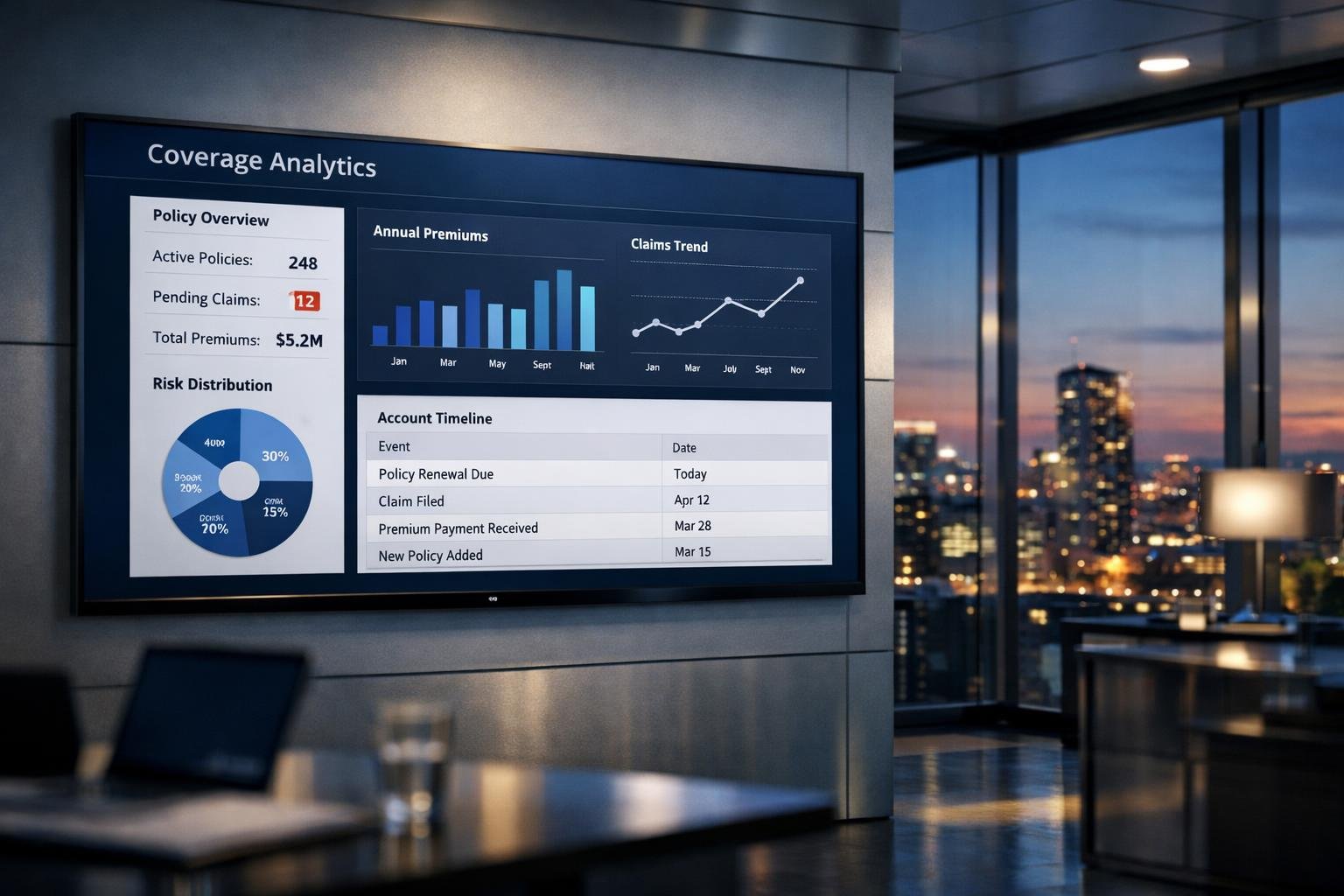
A general P&C agency in the Midwest had written the same healthcare staffing firm for six years — general liability, professional liability, a small commercial auto schedule. A good account. Steady. Renewed every year without drama. Last month, that same account produced the agency’s first OAI cross-sell: a quote request that went out in the morning and coverage that bound the same afternoon. No new back office, no six-week carrier onboarding project, no new hires. New premium landed on an account the agency already owned.
This is the story of how that first OAI cross-sell happened, told from the agency’s seat — because the individual win matters less than how repeatable it is.
The Account Was Already Sitting There
The staffing firm places traveling nurses and per-diem clinicians with hospital systems and outpatient clinics across a dozen states. Every one of those clinicians is a 1099 independent contractor. The agency knew this — it was in the underwriting file, in the contracts, in every renewal conversation. What the agency didn’t have, for six straight years, was a product for the 1099 side of the operation.
That’s not a knock on the agency. Most general P&C shops don’t carry an Occupational Accident Insurance appointment because the traditional path to one is slow, paper-heavy, and built for trucking specialists. So the 1099 exposure sat on the book, visible and unwritten, while the agency renewed the same three policies every year.
The pattern is worth naming because it’s everywhere: the strongest OAI cross-sell candidates are not new prospects. They are accounts where the certificate is already in your file, the relationship is already yours, and sustained 1099 engagement is already documented. Healthcare staffing is one of the clearest examples — rotating benches of independent clinicians, multi-state placement, and a hiring entity that wants those contractors protected and productive.
What the OAI Cross-Sell Actually Took
Here’s the part of the story that surprises producers: the distance between “we’ve never written this line” and “bound” was measured in days for the setup and hours for the placement.
Step One: An Appointment, Not a Project
The agency got appointed through the 1099 Protect program. No book-transfer commitments, no volume gates to start, no six-week implementation calendar. The appointment came through in days, and the agency kept every existing carrier relationship it had. This is a program the agency distributes under its own brand — the rails run behind their name, not in front of it.
Step Two: A Storefront With Their Name on It
Day one of the appointment, the agency had a co-branded enrollment storefront — their logo, their colors, their producer pre-filled on every form — plus a library of print-ready, agency-branded collateral to put in front of the staffing firm. The producer didn’t build anything. He sent brand assets in the morning and had a working page the same day. Multiple agencies are live on this platform now, and same-day onboarding is the standard, not the exception.
Step Three: Phone-First Applications
The staffing firm’s clinicians enrolled from their phones. A five-minute application, no printed forms, no wet signatures routed through a fax machine. The account owner — the staffing firm itself — completed its application the same way. Quotes came back in hours. Coverage bound the same afternoon the firm said yes.
The Numbers From the Agency’s Seat
Strip the story down to what the agency actually gained and the OAI cross-sell math gets simple.
A new revenue line on an owned account. The commission is incremental premium on a relationship the agency had already paid to acquire years ago. Customer acquisition cost on this placement: effectively zero.
No servicing drag. Billing runs real-time and pay-as-you-go, tied to the firm’s actual roster. Nobody at the agency reconciles a monthly premium audit or chases a year-end true-up. The roster changes, the billing follows automatically.
Fee economics that work. The 3% credit card and ACH processing fees pass through to the insured legally via ePayPolicy — so the payment rail isn’t quietly eating the margin on the new line.
All-states reach without endorsement gymnastics. The staffing firm places clinicians across state lines constantly. The program travels with them — no state-by-state endorsement management on the agency’s desk.
A stickier account. This is the quiet one. The agency now holds four lines on that staffing firm instead of three, and one of them is a line the firm’s next-cheapest quote can’t casually replicate. Retention leverage compounds.
And in the background, the staffing firm now carries a documented paper trail of contractor independence — a defensibility layer that makes the whole placement more valuable to the client without the agency having to lead with it.
Why This Story Repeats
None of what happened here depended on the agency being special. It depended on the account fitting a profile — sustained 1099 engagement on a commercial account the agency already writes — and on rails built to move at the speed of a phone call rather than a paper application.
That profile is common. Staffing firms, home health operators, IT consultancies with rotating contractor benches, last-mile delivery contractors, professional services shops — general P&C agencies renew these accounts every month and leave the 1099 layer unwritten. The agency solutions built into this program exist precisely because the cross-sell is sitting on books everywhere, waiting for a producer with a product in hand.
The producer in this story didn’t find a new market. He looked at his own renewal list with a new line to offer.
The Friction That Never Showed Up
When the producer first floated the idea internally, his principal raised the objections every agency raises about adding a line. Worth walking through them, because none of them survived contact with the actual process.
“We don’t have the expertise.” The agency didn’t need to become a specialist. The program provider handles product design, underwriting appetite, and enrollment infrastructure. The producer’s job was the one he already does well: knowing his client’s operation and making the introduction. Producer-facing training covered the rest in a single session.
“Our CSRs are already at capacity.” This was the principal’s real concern, and it’s the one the platform is built around. Because applications are digital and phone-first, billing is automated against the live roster, and certificates issue from the storefront, the new line added no measurable servicing load. No paper files, no manual invoicing, no audit-season scramble. The agency’s service team touched the account less on this line than on the commercial auto schedule they’d been running for years.
“The client won’t want another conversation.” The staffing firm’s response was the opposite. A hiring entity that depends on independent clinicians wants those contractors covered, enrolled fast, and back in rotation — and it wants the paperwork to prove independence was respected at every step. The offer read as the agency solving a problem, not selling one.
Six weeks after binding, the principal’s summary was one sentence: the hardest part of the placement was deciding to make the call.
Run the Same Play on Your Book
If you write commercial accounts, the fastest version of this exercise takes minutes: pull your renewal list and flag every account with sustained 1099 contractor engagement. Staffing, home health, IT consulting, logistics, professional services. Run the flagged accounts through the 1099 Exposure Identifier and see what the cross-sell actually looks like in dollars.
Then get appointed. The setup is days, the storefront is same-day, and the first OAI cross-sell on your book is probably an account you renewed last quarter. Reach out through the appointment page or send a DM — we’ll stand up the rails behind your brand and you keep the relationship out front.