
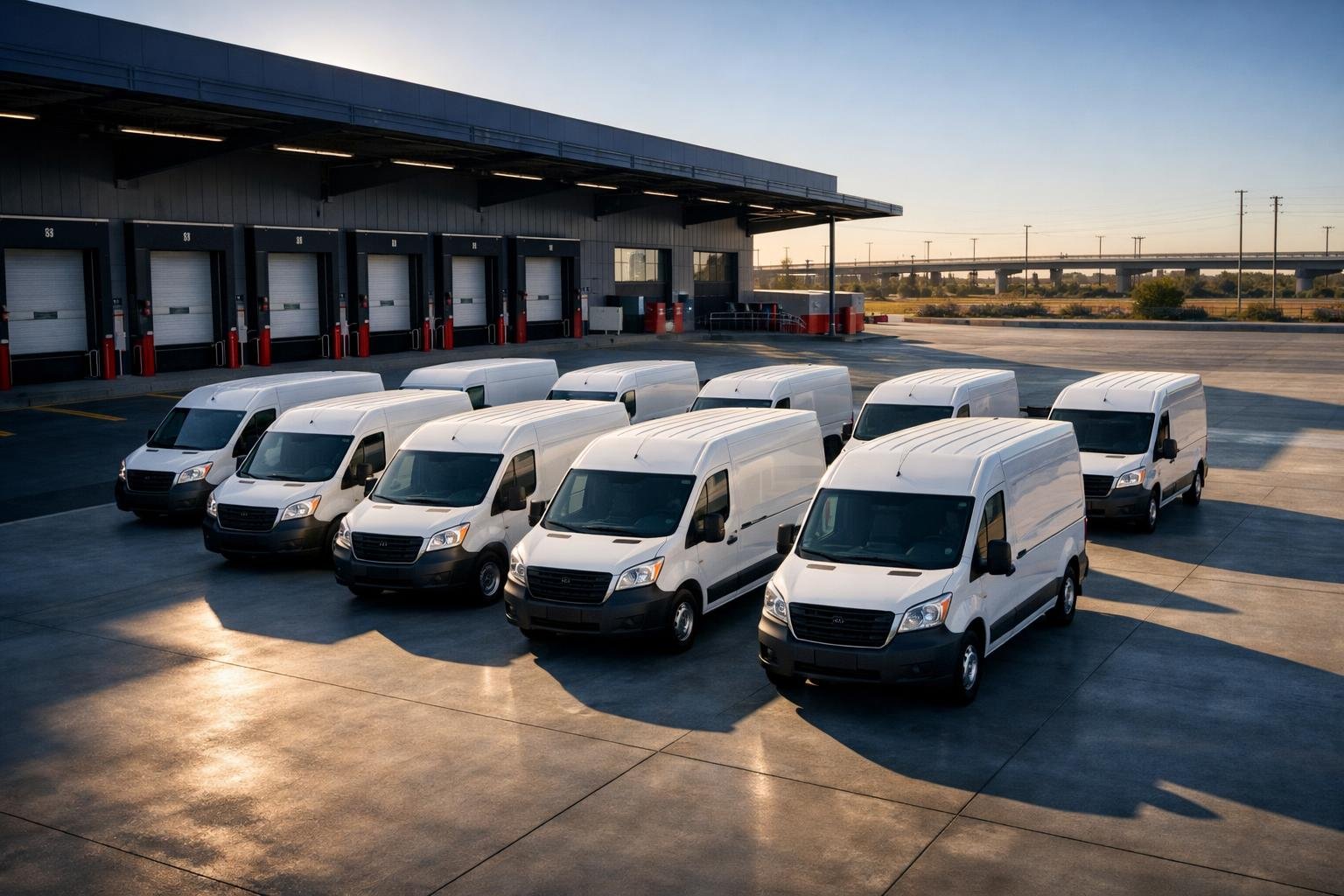
If you operate a Delivery Service Partner business under the Amazon flag, Amazon DSP 1099 driver compliance is no longer an accounting footnote. It is the single largest unfunded liability sitting on your balance sheet. The Department of Labor (DOL) has formally identified last-mile logistics as a 2026 enforcement priority, and the misclassification audit machine has already started moving. One worker complaint, one disgruntled exit interview, one routine state-level UI claim — and your DSP contract is suddenly the subject of a federal review that can void your agreement with Amazon overnight.
This is not theoretical. State labor boards are coordinating with the federal Wage and Hour Division, and the new 2026 DOL economic reality framework is engineered to reclassify the precise contractor models that DSPs depend on. If you are running 1099 drivers without a documented Compliance Firewall, you are not running a business — you are running a countdown clock.
The Amazon DSP Model: A Misclassification Powder Keg
The DSP program was designed to grow Amazon’s last-mile capacity without putting drivers on Amazon’s payroll. The structural compromise is well known: DSPs are independent businesses, but they operate inside an ecosystem that controls routes, equipment standards, scorecards, customer interaction protocols, and even uniform specifications. That is fine — at the entity level. The DSP is genuinely a separate company.
The exposure begins one layer deeper. Many DSP owners then sub-engage drivers as 1099 independent contractors to flex capacity, cover seasonal surges, or escape the payroll tax burden of W-2 conversions. That second-tier classification is where the DOL is concentrating fire. Federal investigators are not interested in litigating the DSP-to-Amazon relationship. They are interested in the DSP-to-driver relationship, because that is where the doctrine of economic reality bites the hardest.
Why the DOL Is Targeting Last-Mile Delivery in 2026
Three factors converged this year to put last-mile DSPs at the top of the enforcement priority list. First, the 2026 final rule on independent contractor classification restored a multi-factor economic reality test that weights control and integration heavily — both of which describe the DSP-to-driver relationship almost perfectly. Second, the FedEx Ground settlement precedent created a roadmap that plaintiff-side firms are now copy-pasting onto Amazon-adjacent operators. Third, state attorneys general in California, New Jersey, Massachusetts, and Illinois are running parallel investigations and sharing data with federal regulators in real time.
The result: a DSP that runs even a small 1099 driver pool is now being flagged by automated triage systems before a human investigator ever reads the file. The audit is not coming because someone is suspicious of you. The audit is coming because your business model matches a pattern.
The Five Audit Tripwires Every DSP Owner Must Fix
Misclassification audits are not won or lost on intent. They are won or lost on documentation and structural reality. Every DSP using 1099 drivers needs to inspect these five tripwires today.
1. Route Control and Daily Scripting
If you assign specific routes, mandate departure times, or dictate the order of stops, the DOL will treat that as direction and control — a primary indicator of an employment relationship. Independent contractors should bid on or accept routes as discrete jobs, not be assigned them as shifts.
2. Branded Uniforms and Vehicles
The Amazon vest, the branded van, the DSP company logo — these are operational requirements you cannot escape. The defense is contractual clarity: the driver is performing branded work as a condition of the route contract, not as a uniformed employee. The agreement language matters more than most operators realize.
3. Performance Scorecards as De Facto Supervision
Daily scorecards, on-road safety metrics, customer feedback ratings — the more granular your performance management, the more it looks like employee supervision. Aggregate, contract-level scorecards survive audits. Daily performance reviews of individual drivers do not.
4. Exclusive Engagement Clauses
If your driver agreements prohibit the contractor from working for other carriers or other DSPs, you have just handed the DOL the single most damaging exhibit in their case file. True independent contractors have the right to multiple revenue streams. Anything else is exclusivity dressed up as a 1099.
5. Missing Occupational Accident Coverage
The largest unfunded liability in the DSP world is the absence of injury coverage for 1099 drivers. When a contractor is hurt on a route and has no Occupational Accident Insurance (OAI), they have exactly one financial path forward: file a workers’ compensation claim, argue they were misclassified, and trigger the audit cascade. 1099 Protect exists specifically to close this gap before it becomes a courtroom exhibit.
The Compliance Firewall: Building Audit Immunity Before the DOL Knocks
Audit immunity is not a single document. It is a stacked architecture of contracts, coverage, and operational hygiene. The DSPs that survive a DOL review have four elements documented and in force before any investigator arrives:
A written independent contractor agreement that uses current 2026 economic-reality-compliant language. A documented Occupational Accident Insurance policy on every active 1099 driver. A clean separation between the entity-level Amazon DSP contract and the individual driver engagement model. And — critically — a pre-audit exposure assessment that identifies tripwires before the DOL finds them. Our Exposure Identifier tool was built to run exactly this diagnostic for DSP operators in under five minutes.
Why Pay-As-You-Go OAI Is Non-Negotiable for DSPs
Traditional annual policies were built for static workforces. DSPs are not static. Driver rosters fluctuate weekly, peak season triples your headcount, and a contractor who worked yesterday may not work tomorrow. Annual premiums based on estimated payroll create two problems simultaneously: you overpay during slow weeks, and you are underinsured during surge weeks.
Pay-as-you-go Occupational Accident Insurance solves both. Premiums adjust with actual driver activity, coverage tracks the active roster in real time, and the audit trail produced by the billing system itself becomes a defensive exhibit. When the DOL asks how you covered driver injuries during a specific week eighteen months ago, you have a per-driver, per-week ledger that closes the question instantly. That is what we mean when we say a Compliance Firewall is a billing architecture, not just an insurance product. Visit 1099protect.com to see how the WORK program operationalizes this for DSPs.
Final Verdict — The Window Is Closing
The DSPs that will still be operating in 2027 are the ones treating Amazon DSP 1099 driver compliance as an architectural problem this quarter, not a paperwork problem next quarter. The DOL is not waiting for you to finish your internal review. State agencies are not pausing their audits to give you time to remediate. The legal and operational standard has shifted, and the operators who shift with it will absorb the routes vacated by the ones who do not.
The cost of one DOL audit — fines, back taxes, contract termination, legal defense — runs into six figures before the lawyers even bill their second hour. The cost of building audit immunity is a fraction of that. The arithmetic only works in one direction.
Audit immunity is not a luxury. It is the new minimum viable infrastructure for a DSP business. Get the Exposure Identifier running on your operation this week, and stop your single largest unfunded liability from becoming a closure event.