
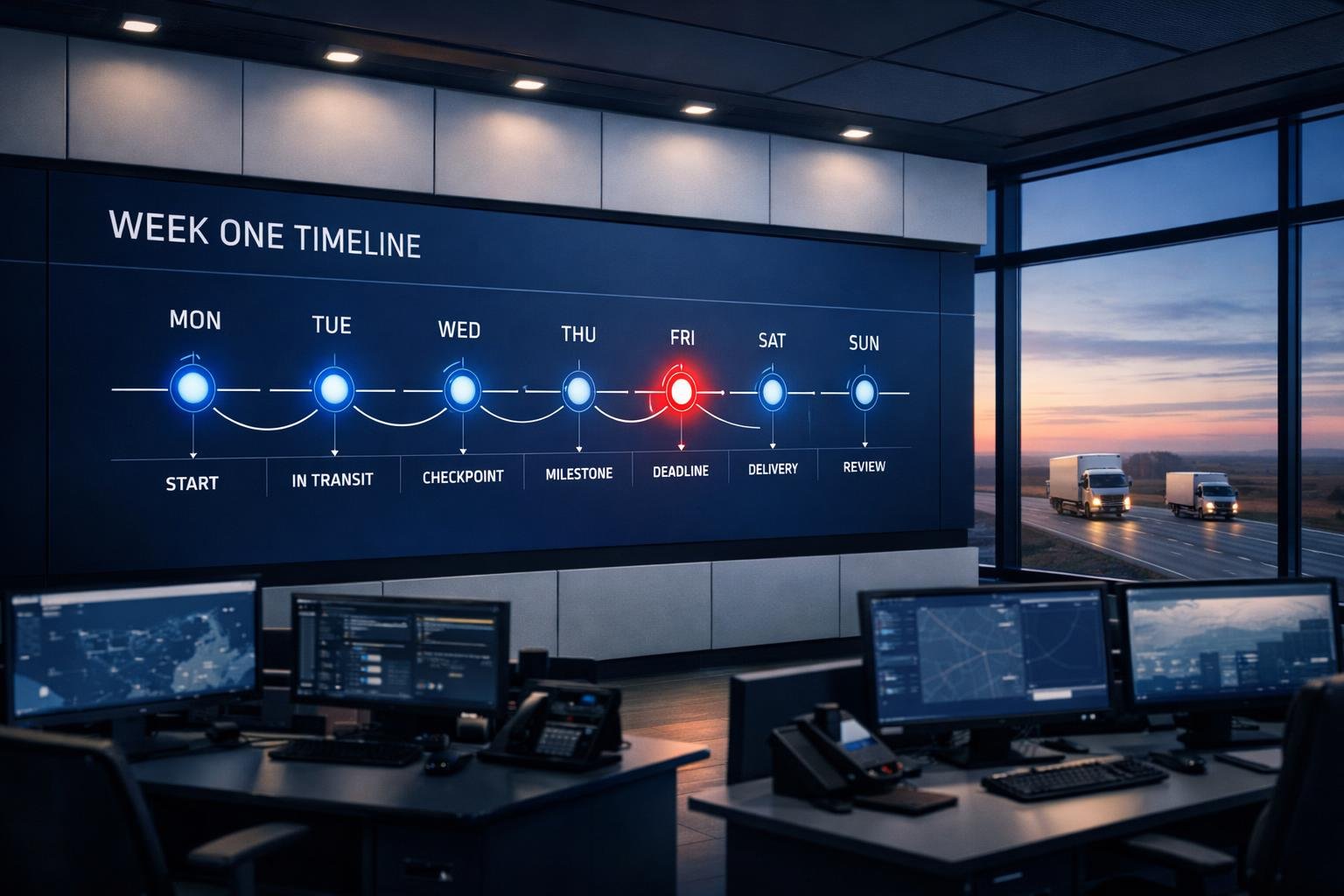
An agency sent us a logo on a Tuesday morning. By Tuesday afternoon, their branded enrollment page was taking applications. That is not a launch story we tell once a quarter — it is the standard sequence every new OAI agency appointment runs through, and it is worth walking the whole first week so you can see exactly what you are signing up for. Most producers evaluating a new program expect a slow ramp: paperwork, portal training, a marketing kit that shows up a month later. An OAI agency appointment with 1099 Protect runs on different rails, and the difference shows up on day one.
Day One: Your Storefront Goes Live
The first deliverable of your OAI agency appointment is a co-branded storefront — your logo, your colors, your producer information pre-filled on every form. You send us the brand assets in the morning; the page is live and taking applications the same day. There is no development queue and no “we’ll have creative review it.” The build is systematized, which is why it happens in hours.
What the storefront actually does
This is not a brochure page. It is a working enrollment front door. Every driver or contractor your clients send to it lands on a phone-first application that carries your agency’s name and routes back to your book. When a motor carrier or a staffing firm asks their people to enroll, they see your brand doing the work — which means the retention value of the placement accrues to you, not to a program provider they have never heard of.
24 pieces of collateral, delivered with the page
Alongside the storefront, day one includes a full marketing library: 24 print-ready, agency-branded pieces — driver flyers, owner one-pagers, and sales sheets your producers can hand to a prospect that afternoon. If you want to see how the co-branding engine works before you commit, the custom sales sheet generator shows the mechanics: your brand goes on the front, the program rails stay behind it.
Days Two and Three: The First Applications Move
With the storefront live, the next thing a new OAI agency appointment produces is motion. Applications on the platform are phone-first — a driver or contractor completes enrollment from the cab of a truck or the front seat of a delivery van in about five minutes. No paper packets, no wet signatures chasing a fax machine.
From your seat, the sequence looks like this:
- The application arrives digitally — complete, legible, and already tied to your producer code.
- Quoting happens in hours, not days. The account owner gets numbers while the opportunity is still warm.
- Binding follows the same clock. Coverage that quotes in the morning can be bound before close of business.
Producers who have placed Occupational Accident Insurance through legacy channels know what the old cycle feels like: an application goes into a queue, a quote comes back the following week, and the prospect has cooled by the time you call. The speed of the platform is not a convenience feature — it is closing leverage. The agency that quotes today wins the account that was shopping yesterday.
What your service team sees
The operational load on your CSRs is the part producers usually ask about second, so it is worth stating plainly: there is almost none. The application is the intake, the intake is digital, and the record it creates is complete on arrival. Nobody on your team re-keys a handwritten form into a management system. Nobody chases a missing date of birth across three phone calls. The enrollment your client’s contractor submits from a phone is the same record that flows through quoting, binding, and billing — one entry, end to end. For an agency that has staffed entire roles around cleaning up program paperwork, this is the difference between adding a product line and adding a department.
It also changes the conversation your producers have with account owners. Instead of “here is the packet, have your drivers fill it out and mail it back,” the pitch is “text your people this link.” An account owner who has onboarded contractors through paper knows exactly how much friction that removes — and the agency that removes it is the agency that keeps the account.
Day Four: The Billing Runs Itself
By midweek, your first bound accounts are on real-time, pay-as-you-go billing. There are no monthly premium audits to reconcile and no true-up calls where you explain a surprise invoice to a client. Coverage tracks the roster; billing tracks the coverage.
Then there is the revenue line most agencies do not see coming: the 3% credit card and ACH processing fee is legally passed to the insured through ePayPolicy. Your agency keeps a billing operation running at full speed with no new back office — no additional staff, no reconciliation spreadsheets, no receivables chase. The rails collect; you distribute.
Day Five: One Appointment, Every State
The end of week one is when most producers ask the question that used to kill programs like this: “What happens when my client runs drivers through six states?” The answer built into your OAI agency appointment is: nothing happens. Coverage is available in all states from a single appointment, without state-by-state endorsements. Federal preemption does the structural work, and your client’s multi-state operation is one account on your book instead of six filings on your desk.
For a trucking-focused shop, that means an over-the-road fleet is as simple to place as a local one. For a generalist commercial agency, it means the staffing firm with contractors in fourteen states is a single conversation, not a licensing project. And when your client expands into a new state next quarter, the coverage is already there waiting — no endorsement request, no gap, no call to your office asking why the new hires in Ohio are not covered yet.
What Week Two Looks Like
Multiple agencies are live and writing on the platform, and the pattern after week one is consistent: the second week is about volume, not setup. The storefront link goes into producer email signatures. The collateral goes into renewal packets. The first client mentions it to a peer, and the enrollment page starts collecting applications your producers never had to solicit.
Under the growth story, there is a quiet structural benefit: every enrollment on the platform builds a documented paper trail of contractor independence for your clients. You do not need to lead with that — the speed and the new revenue line sell the program — but it is part of what your clients are standing on, and it makes the placement stickier at renewal.
If you write commercial accounts that run 1099 contractors — trucking, last-mile, healthcare staffing, IT, professional services — the distribution opportunity is already sitting on your book. The agency solutions overview maps the program to each vertical.
Getting Appointed Is the Short Part
The whole point of walking the first week is this: the machine is already built. Your OAI agency appointment is not a project you manage — it is a switch you flip. Logo in the morning, storefront in the afternoon, applications by the end of the week, billing that runs itself from bound account number one.
This is what going live looks like. If you want your agency’s brand on the front of these rails, get appointed and we stand it up — the same day you send the logo.