
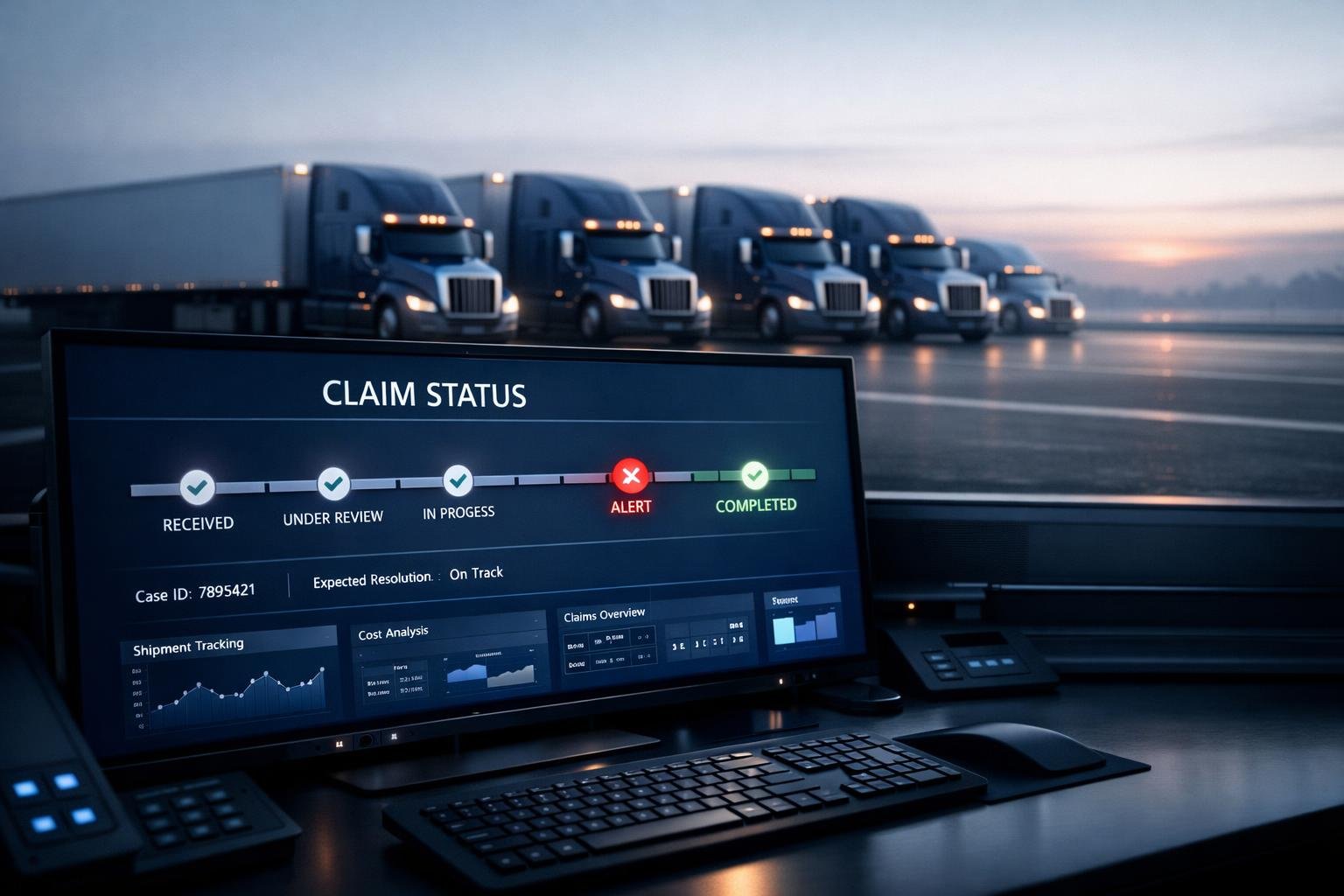
Trucking agencies don’t lose OAI accounts at quote time. They lose them at claim time. OAI claims response is the service test every placement eventually takes, and it’s the test most incumbent programs fail — slowly, quietly, and in front of your client. When a claim sits in a queue for three weeks, the fleet owner doesn’t call the carrier. He calls the agent who sold him the program. And at renewal, he remembers exactly who made him wait.
If your current OAI placement treats claims service as a back-office afterthought, that placement is costing you accounts you already won. Here’s how to turn claim-time service into the strongest retention argument on your desk — and why agencies moving their OTR and owner-operator books onto modern rails are keeping clients their competitors can’t.
Why OAI Claims Response Decides the Renewal
Quote time is a beauty contest. Claim time is the product. An OTR motor carrier running a 1099 owner-operator fleet interacts with its Occupational Accident Insurance program a handful of times a year, and almost all of those interactions happen when something needs to be processed. That’s when your client learns what you actually sold him.
The renewal math follows directly. A fleet owner who watched a claim get acknowledged the same day, tracked its status from his phone, and saw movement measured in days will sign the renewal without shopping it. A fleet owner who spent February leaving voicemails for an adjuster will take the next cold call that promises better. OAI claims response isn’t a service detail. It is the retention mechanism — and most incumbent programs hand it to you as a weakness ready to be displaced.
The one question that opens the account
You don’t need to attack the incumbent’s coverage grid to move a trucking account. You need one question at the next review: “When your last OAI claim went in, how long before anyone confirmed it was received?” Then stop talking. If the answer involves the word “eventually,” the account is already in motion.
The Incumbent Failure Mode: Paper In, Silence Out
The legacy OAI programs still holding most trucking books were built on a workflow that hasn’t changed in fifteen years: a PDF claim form, a fax number or an unmonitored inbox, a regional adjuster juggling a hundred open files, and a status update that arrives whenever someone gets around to it.
From the agency’s seat, that produces a predictable sequence:
- The dispatcher submits paperwork and hears nothing for ten days.
- The fleet owner calls you for a status you don’t have.
- You call the program’s service line and wait on hold to learn the file “is in review.”
- You relay a non-answer to a client who is now quietly re-evaluating the placement — and the agency behind it.
None of that is your fault. All of it lands on your agency, because the client experiences the program through your brand. A slow claims desk converts your best service asset into a liability that compounds every time a file sits idle. That is the specific failure mode worth naming when you review a trucking account’s current OAI placement: not the coverage schedule, not the rate — the turnaround.
There’s a second cost hiding under the first one. Every hour a producer spends chasing a status update on someone else’s slow desk is an hour not spent quoting new business. An incumbent with poor OAI claims response doesn’t just endanger the account in question; it taxes your whole operation, one hold queue at a time. Agencies rarely price that drag into the placement decision. They should — it’s the difference between a program that works for you and a program you work for.
What Fast OAI Claims Response Looks Like on Modern Rails
The WORK Program was built on the opposite assumption: every service interaction, claims included, should run on the same automated rails as enrollment and billing. Here’s what that means from the agency’s seat.
Digital intake, same-day acknowledgment
Claims start from a phone, the same way applications do. No PDF scavenger hunt, no fax machine archaeology. Submission is confirmed immediately, so the participant knows the file exists and your client — the Account Owner — isn’t guessing. The days of “did anyone even get it?” end on day one.
Status your client can actually see
Because the program runs on automated infrastructure end to end, status doesn’t live in an adjuster’s head. It moves where the participant and the Account Owner can see it move. When your client can watch a file progress, the “any update?” phone calls to your office stop before they start — and your producers get their afternoons back.
Service velocity across the whole placement
Expedited OAI claims response is one expression of a broader machine. The same rails deliver a co-branded storefront — your logo, your colors, your producer pre-filled on every form — live in a day. Phone-first applications quote and bind in hours, not days. Billing runs real-time and pay-as-you-go, so roster changes settle as they happen with no year-end premium reconciliation surprise. Coverage works in all states from a single appointment, with no state-by-state endorsements to chase. And the 3% credit card and ACH processing fees pass legally to the insured through ePayPolicy, which turns your billing rail into a revenue line with no new back office.
Speed at claim time and speed at bind time are the same argument: the program that moves fastest makes its agency look best. The full program breakdown for transportation books lives at 1099protect.com/trucking.
The Switching Math: Appointment to First Bind
The displacement move itself is mechanical, and it doesn’t require ripping anything out on day one:
- Get appointed in days, not quarters. The appointment process is built for producers who want to write this week, not next cycle.
- Quote in parallel. Nothing forces a hard cutover. Run the WORK Program beside the incumbent at the next renewal and let the service delta make the argument.
- No book-transfer pain. Drivers enroll by phone against your co-branded storefront, and each application quotes and binds in hours. A roster moves without weeks of paperwork.
Multiple agencies are live on the platform and writing today, and same-day onboarding is the standard. One agency sent us a logo on a Tuesday morning; by Tuesday afternoon its branded enrollment page was taking applications. Pair that storefront with the collateral library — 24 print-ready, agency-branded pieces delivered on day one — through the custom sales sheet generator, and you’re leading the claims-service conversation in your own brand, on your own paper.
The retention math compounds from there. A trucking account defended with visible claim service renews at a premium you don’t have to discount, refers the two other fleet owners at the truck stop, and adds drivers to the roster without adding friction to your office. Fast OAI claims response is the rare service upgrade that pays the agency twice: once in the account you keep, and again in the account it brings you.
The Bottom Line for Your Trucking Book
Every trucking account on your book that carries an OAI placement will eventually test its claims desk. If the incumbent fails that test, your agency absorbs the damage. If the placement passes it visibly, your agency collects the loyalty. That asymmetry is the entire case for moving the book: OAI claims response is the one service moment your client never forgets, and it’s the one most incumbents have already decided not to win.
Your renewal defense and your best displacement weapon are the same placement. Get appointed, stand up your co-branded storefront in a day, and let the next claim make your case for you.